
3 Days in Vienna: Coffee, Culture, and Classical Music on a Budget
May 4, 2026
Vienna is a city that took its imperial legacy and turned it into one of the world's great public cultural infrastructures. The Habsburg palace complex is now a museum system. The opera house sells standing tickets for €4. The coffee houses are unchanged since the 1890s and the prices are not materially different from a chain café. The combination of genuine grandeur at accessible prices makes Vienna one of the best-value city breaks in Central Europe — if you know how it works.
Getting There
Vienna International Airport (VIE) is served from London by British Airways, Austrian Airlines (OS), easyJet, and Ryanair. EasyJet and Ryanair dominate the budget end; Austrian Airlines offers a more refined experience (particularly the business class lounge at VIE, if you're traveling on points or a sale business fare). Return fares from London average £90–130 in shoulder season, £150–200 in peak summer. November and January are the lowest-priced months; December runs sharply higher for the Christmas market period.
Austrian Airlines (OS) is worth checking specifically for Vienna, because it prices its home hub city routes differently across markets — booking through a non-UK version of the site can yield 15–20% savings. The same principle applies to fares via Lufthansa's partner network.
From the airport, the City Airport Train (CAT) runs to Wien Mitte in 16 minutes for €12 one-way (€19 return). The S7 suburban train covers the same route in 25 minutes for €4.20. The price difference buys you 9 minutes, which is a matter of preference.
Day 1: The Ringstrasse and the Imperial Core
The Ringstrasse — the circular boulevard that Emperor Franz Joseph built in the 1860s — is one of the most coherent pieces of city planning in Europe. In the space of 4 kilometres, you pass the Vienna State Opera, the Kunsthistorisches Museum, the Naturhistorisches Museum, the Parliament building (neo-classical, modeled on the Parthenon), the Rathaus (neo-Gothic, modeled on a Flemish town hall), and the Burgtheater. All of this is walkable in 90 minutes if you don't stop; allow three hours if you want to absorb it.
The Kunsthistorisches Museum is the afternoon's primary destination. Its collection of Bruegels, Vermeers, Raphaels, and the Cellini Salt Cellar (an enamelled gold table object made for Francis I of France in 1543, arguably the finest surviving example of Renaissance goldsmithing) is at the tier of the Louvre or the Prado. Entry is €21. Combined tickets with the Naturhistorisches Museum (natural history, across the plaza) are available for €27.
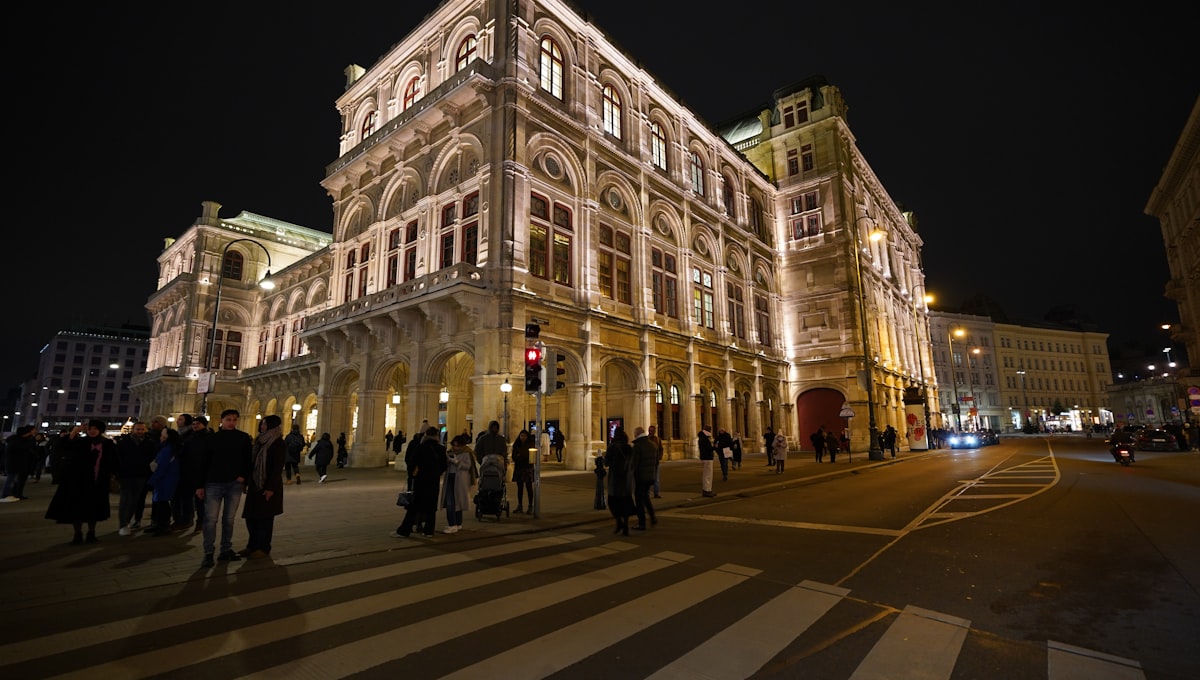
Evening: the Vienna State Opera Standee program. Standing tickets are sold 80 minutes before each performance at the standing room counters. Parterre Stehplatz (orchestra standing) and Balkon Stehplatz (gallery standing) are €4 each. The opera house is one of the finest in the world; the program runs from September through June and covers the major repertoire (Verdi, Mozart, Wagner, Puccini, Strauss). You will stand for 2.5–3 hours. Dress code is enforced for seated areas but not standing. Bring something to lean on and arrive early for a railing spot.
Day 2: Schönbrunn, the Naschmarkt, and the 7th District
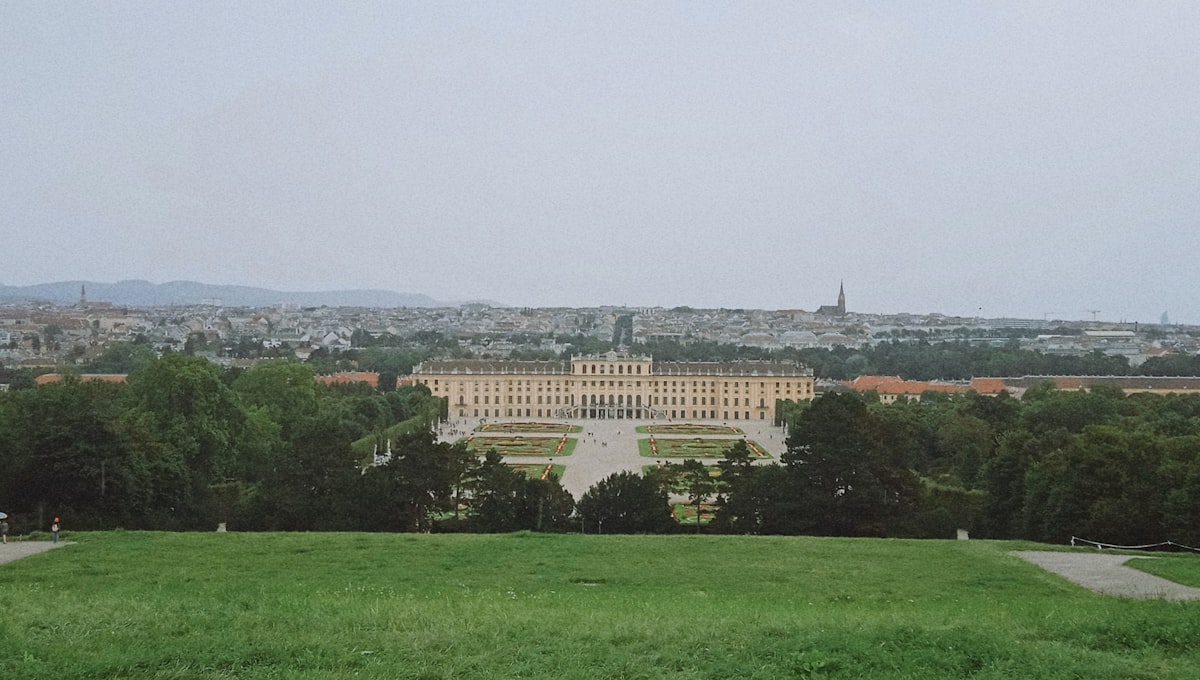
Schönbrunn Palace is the Habsburg summer residence and one of the most visited monuments in Austria. The "Grand Tour" (40 rooms, €26) is excellent; the "Imperial Tour" (22 rooms, €20) covers the essential spaces. The Palace Gardens are free and worth 90 minutes even if you skip the palace interior. The Gloriette at the top of the hill behind the palace offers a view across Vienna that is worth the 15-minute climb.
The Naschmarkt, a 1.5 kilometre open-air food market running along the Wienzeile, is best on Saturday mornings when the flea market component joins the permanent produce stalls. Weekday mornings are quieter but still worth visiting. The Turkish, Middle Eastern, and Eastern European food stalls produce some of the best-value breakfast and lunch in Vienna: a Türkischer Kaffee with a börek costs less than €5. The fresh olive and cheese stalls rival anything available in Vienna's restaurants at three times the price.
The 7th district (Neubau) is Vienna's design and independent restaurant neighborhood. Lunch here at one of the Austrian-Asian fusion restaurants on Siebensterngasse or in the Spittelberg quarter produces better value than anything in the 1st district at similar quality. Budget €15–20 for lunch at a table.
Day 3: Belvedere and the Modernists
The Upper Belvedere palace houses Austria's national art collection, including Klimt's The Kiss — the most reproduced image in Austrian art history and, in person, a considerably more affecting object than reproduction suggests. The gold leaf applications are tactile and dimensional in ways that photographs flatten. Entry to the Upper Belvedere is €16. The Lower Belvedere (baroque museum, orangery) is a separate ticket at €14; combined entry is €25.
The Vienna Secession building (the gold "cabbage-head" dome building near the Naschmarkt, the art nouveau exhibition hall that Klimt's generation built as a challenge to the academy) houses the Beethoven Frieze — a 34-metre painting Klimt made in 1902 — in the basement. Entry is €9.50. It takes 30 minutes. It is one of the most concentrated pieces of Viennese modernism available and almost universally overlooked by tourists concentrating on Schönbrunn.
The Coffee House Question
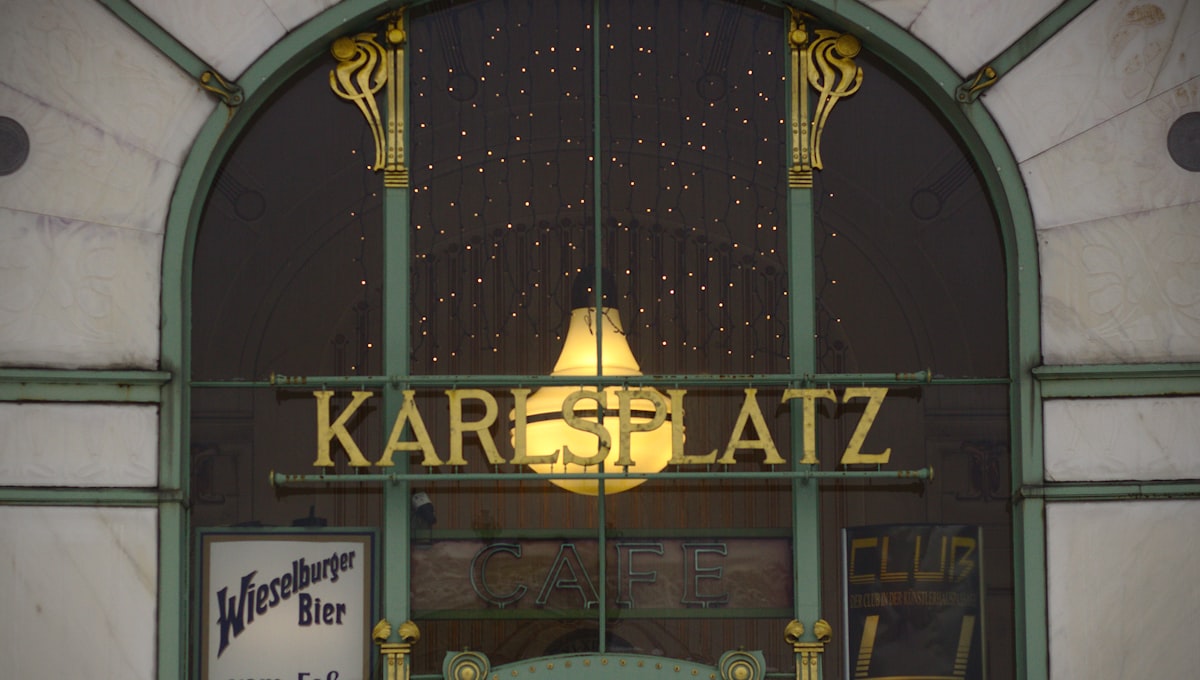
Vienna's coffee house culture is a UNESCO intangible cultural heritage. The canonical houses — Café Central (Herrengasse 14), Café Landtmann (across from the Rathaus), Café Sacher (behind the Opera, famous for the original Sachertorte) — all charge roughly the same prices: a Melange (the Viennese latte) is €4.50–5.50, a slice of cake €7–9. The tradition is that you may sit for as long as you like with a single order; no one rushes you. This is worth knowing — a café breakfast at Café Central with a Melange, a Kipferl (croissant), and an hour reading the newspaper costs €9–12 and includes no social pressure to leave.
What Things Cost
Accommodation: a three-star hotel in the 4th or 6th district (close to the Naschmarkt, tram connections to everywhere) runs €90–130/night for a double. The 1st district is €150–220/night for equivalent quality. The Vienna City Card (€17.90/24h, €25.90/48h, €32.90/72h) covers all public transport and provides discounts at many museums — essential if you're using trams and metro.

Per-person daily budget eating well (not tourist-menu): €50–65 for food and drink. Total for three days excluding accommodation and flights: approximately €200–250 per person, including the opera standing ticket, two major museums, and Schönbrunn.