
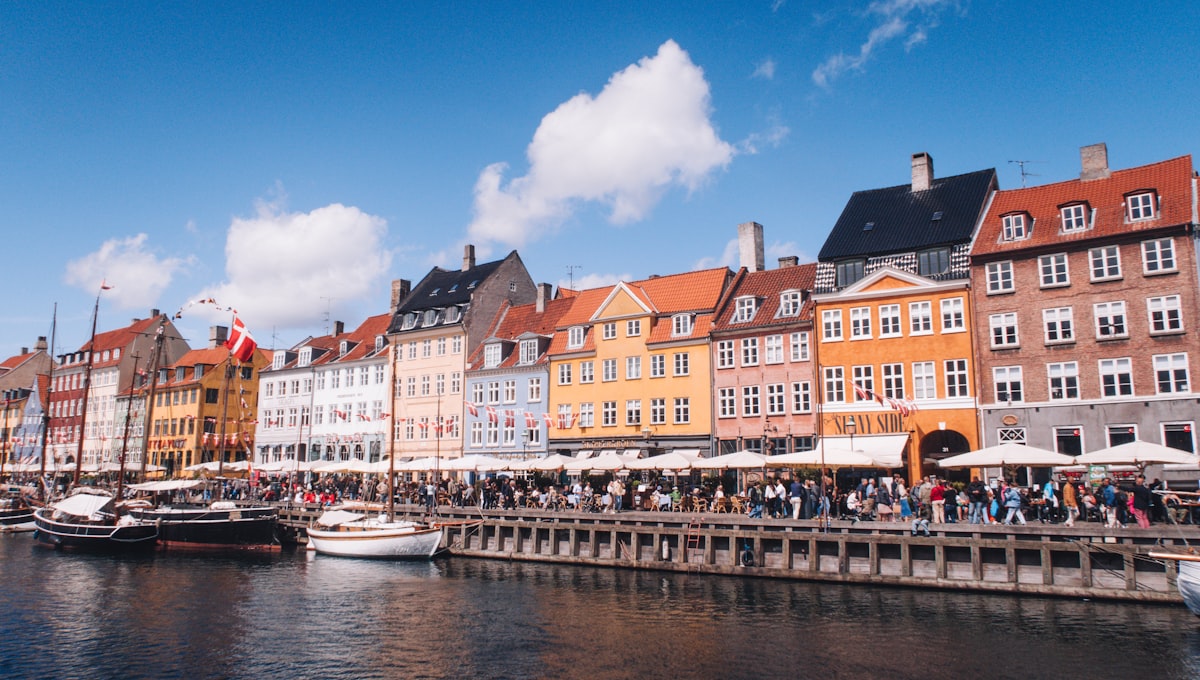
48 Hours in Copenhagen: Nyhavn, New Nordic Food, and Bikes
May 14, 2026
Copenhagen is one of the most satisfying cities in Europe for a short break. Compact enough to cover by bicycle in a weekend, rich enough in food, architecture, and cultural depth to justify significantly longer, and operating at a human scale that makes the whole experience feel unusually relaxed for a capital city.
It is also expensive. Denmark's high wage floor and consumption taxes mean that coffee costs £5, beer can be £8 in a central bar, and a restaurant dinner for two at a mid-range establishment routinely exceeds £100. This is not a budget destination. But approached with some planning, two days in Copenhagen can be one of the best 48 hours you spend in Europe.
Getting There
Copenhagen Airport (CPH) is one of the most accessible in Europe. British Airways (BA), easyJet (U2), SAS (SK), and Norwegian (DY) all operate multiple daily services from London. Fares start around £60–£80 one-way from Gatwick or Heathrow in shoulder season and are rarely above £150.
The Airport Metro connects CPH to the city centre in 15 minutes for DKK 36 (around £4). It runs 24 hours. Leave the taxi queue untouched.
Day One Morning: Nørreport and the Lakes
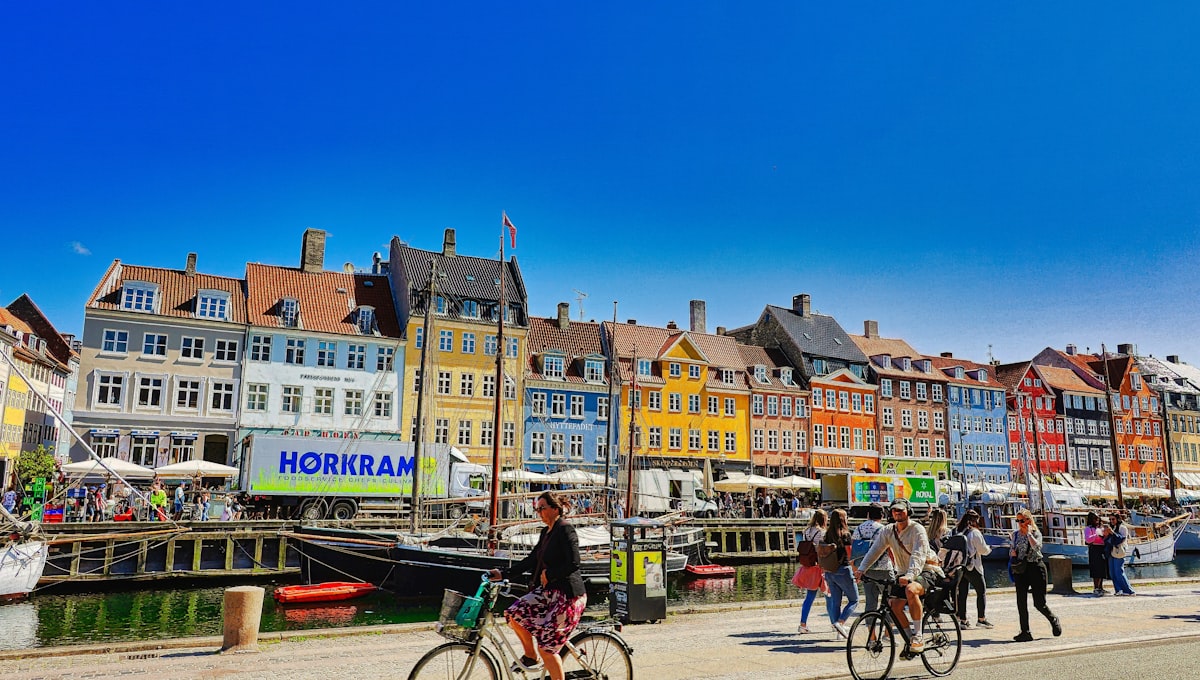
Resist the urge to start at Nyhavn. It is beautiful, photogenic, and overrun with tourists before 9am. Start instead at Nørreport Station and walk through the Torvehallerne market (open from 10am) — a covered food market serving excellent smørrebrød, specialty coffee from The Coffee Collective, and freshly shucked oysters at a fraction of restaurant prices.
Walk west to the Lakes (Peblinge Sø, Sortedams Sø) and follow the path north into Nørrebro. This neighbourhood is Copenhagen's most genuinely diverse and feels entirely different from the tourist-facing city. The Assistens Cemetery — Nørrebro's large green park-cemetery, where Hans Christian Andersen and Søren Kierkegaard are buried — is one of the finest quiet spaces in the city.
Day One Afternoon: Nyhavn and Christianshavn
Now go to Nyhavn. By late morning, the canal's coloured facades are in full sun and the worst of the early crowds have moved on. Don't sit at one of the canal-side tourist restaurants — they are decorative rather than gastronomic. Instead, walk five minutes south to Christianshavn.
Christianshavn is Copenhagen's most interesting neighbourhood architecturally: 17th-century merchant canals, Dutch-inspired townhouses, and the extraordinary spiral tower of Our Saviour's Church (Vor Frelsers Kirke), which you can climb for a 360-degree view of the city. The external staircase spirals around the golden spire — not recommended if vertigo is a problem, extraordinary if not.
Spend an hour exploring the streets around Torvegade and Christiania, the self-declared autonomous neighbourhood that has existed in legal ambiguity since 1971. Christiania's main drag (Pusher Street) is unchanged in character from decades past — take photos with discretion as cameras are not welcome in certain sections.
Day One Evening: New Nordic
Copenhagen redefined European gastronomy when Noma opened in 2004 and subsequently closed its main location in 2024 before relaunching. The legacy is a city full of restaurants doing exceptional things with Nordic ingredients, fermentation, and seasonal produce.
For a full New Nordic experience without paying Noma's original £300+ per head, Kadeau (two Michelin stars) and Geranium (three Michelin stars, though reservations are required months ahead) are the benchmark. For something more accessible, Amass in Refshaleøen serves an inventive seasonal menu at £60–£80 per person with wine pairing.
For a less formal but excellent dinner, Warpigs on Flæsketorvet — a collaboration between Mikkeller brewery and Three Floyds — serves excellent smoked meats and outstanding Danish craft beer in a stripped-back brewpub setting. Dinner for two with beers: around £70.
Day Two Morning: Bicycles and the Harbour
Rent a bicycle. Copenhagen has around 400 km of segregated cycle lanes, and the entire city infrastructure is built around the assumption that most people travel by bike. Donkey Republic bikes are available across the city from around DKK 60 per day (£7). Virtually every major destination is within 30 minutes of every other on two wheels.
Cycle through the Meatpacking District (Kødbyen) — now fully gentrified but still sporting its original white tiled industrial aesthetic — and down to the new Harbour Baths at Islands Brygge. In summer, these outdoor harbour pools are free to use and are one of Copenhagen's finest amenities.
Continue to the Design Museum Denmark on Bredgade for the permanent design collection, which traces Danish furniture and industrial design from the 18th century to the present. It is the finest applied arts museum in Scandinavia and rarely overcrowded.
Day Two Afternoon: Louisiana Museum
Take the train 40 minutes north to Humlebæk for the Louisiana Museum of Modern Art. This is one of Europe's great modern art museums, perched on a cliff above the Øresund with views to Sweden. The permanent collection includes Giacometti, Warhol, Dubuffet, and a particularly strong selection of Danish postwar art. The sculpture garden is spectacular in any season.
Return to Copenhagen for a final dinner. Marv & Ben, a small neighbourhood bistro in Indre By, serves excellent value French-influenced Danish cooking at prices considerably below the city's fine-dining tier — mains around £25, bottles of wine from £35.
Practical Notes
The Copenhagen Card (available for 24, 48, 72, or 120 hours) covers unlimited public transport and free entry to over 80 museums including the Louisiana and the National Museum. At DKK 679 for 48 hours (around £76), it saves money if you plan to visit more than three or four paid attractions.
Pay everywhere by contactless — Denmark is essentially a cashless society. Tipping is not expected at most restaurants, though rounding up the bill is common for exceptional service.
Budget £250–£350 per person for 48 hours including accommodation in a mid-range hotel (approximately £100–£130 per night), food, transport, and entry fees. Copenhagen rewards travellers who eat lunch at market stalls and save their restaurant budget for a single exceptional dinner.