

Should You Book Flights in Local Currency or Your Own?
May 4, 2026
Every traveler who has booked a flight through a non-UK website has seen the offer: "Pay in GBP for your convenience." It seems helpful — no surprises on your statement, no wondering what €420 converts to. But that offer is almost always expensive, and understanding why it's expensive changes how you approach every future international booking.
Dynamic Currency Conversion: What's Actually Happening
When a European airline or OTA offers to charge you in your home currency, they're using a mechanism called Dynamic Currency Conversion (DCC). Here's the mechanics:
The flight is priced in euros — say, €380. The airline or OTA converts that to GBP at a rate they set, which is typically 3–6% worse than the real interbank exchange rate published by Reuters or Bloomberg. They pocket the margin on the conversion. You pay £338 instead of the £325 that a zero-fee credit card would produce at the real rate.
The margin is called the "spread" and it's never disclosed as a fee — it's hidden inside the exchange rate. You see a GBP amount that looks plausible, you accept it, and the overcharge is invisible.
This isn't illegal. It's disclosed in most terms and conditions in fine print. But it costs UK and US travelers hundreds of millions of pounds and dollars annually in aggregate.
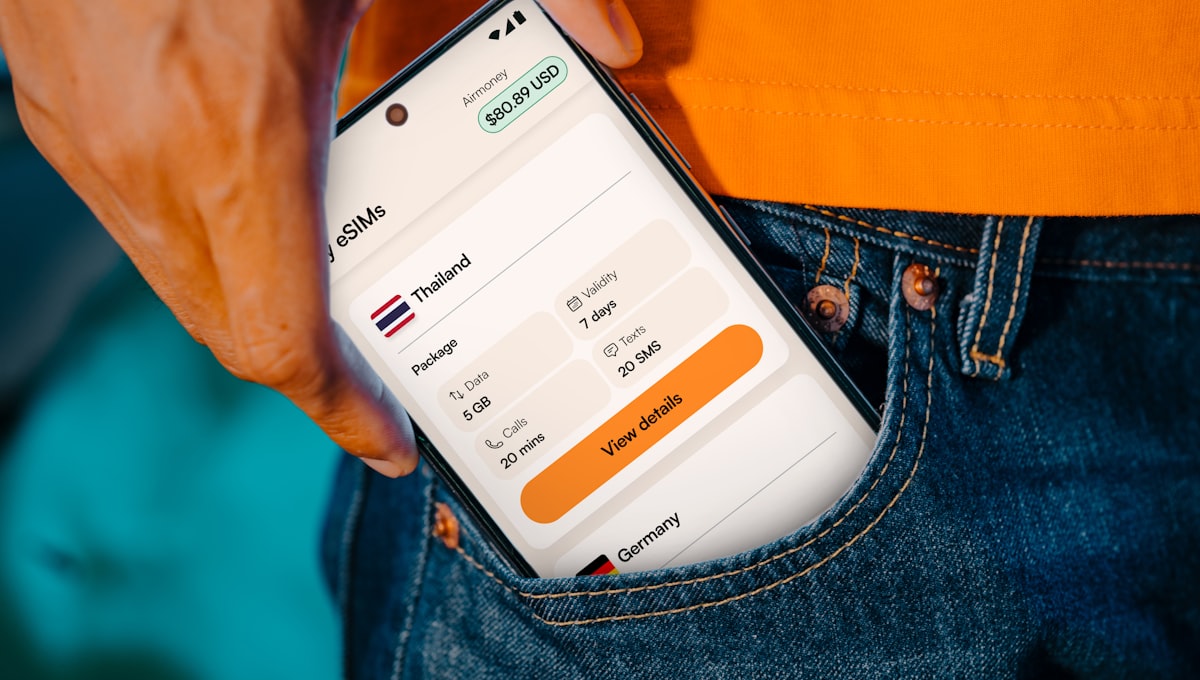
When to Choose Local Currency
The correct answer for almost every international booking: pay in the local currency of the transaction (the currency in which the price is set), and use a credit or debit card with no foreign transaction fees.
Why this works: when you pay in the local currency, your card issuer does the conversion at the interbank rate plus any fee your card charges. Premium travel cards (Chase Sapphire, Amex Platinum, Capital One in the US; Monzo, Starling, Wise in the UK) charge 0% on foreign transactions. Budget cards charge 1.5–3%, but this is still usually better than DCC's 3–6%.
The only exception: if your card charges a foreign transaction fee above 3%, you may be better off accepting DCC on very large transactions where the visible convenience has value. But the answer is really to get a better card.
The Currency Layer in Regional Flight Pricing
There's a second, related concept that's more interesting from a savings perspective: the base price of a flight genuinely differs by currency market, not just the conversion rate.
When RegionFare shows you that a Frankfurt–Bangkok ticket costs £640 in the UK market, £550 on the German-market version, and £520 on the Israeli-market version, those aren't the same price with different conversion rates applied. They're genuinely different prices — the airline has priced the fare differently for different markets.
This is distinct from DCC. DCC is the conversion markup on a single fixed price. Regional pricing variation means the underlying price is different before any conversion happens.
Booking through a non-UK market at a lower base price, and then paying in that market's local currency with a zero-fee card, compounds both savings: you're starting from a lower price and converting at a favorable rate.
Practical Steps for Any International Booking
1. Identify the cheapest market using a cross-market tool (RegionFare does this for you on flight searches). Note the local currency of the cheapest booking market.
2. When checking out on the non-UK airline or OTA site, verify the displayed currency matches the local currency. If the site automatically shows GBP, look for a currency selector and switch to local currency.
3. Pay with a card that has zero foreign transaction fees. In the UK: Monzo, Starling, Chase UK, Halifax Clarity. In the US: Schwab Investor Card, Chase Sapphire, Capital One Venture.
4. Check your statement to confirm the conversion rate. Compare it to xe.com's interbank rate for the same day. The difference should be under 0.5% on a zero-fee card.
What About PayPal and Stripe?
PayPal consistently applies DCC by default when the transaction is in a foreign currency. When paying by PayPal on an international booking, you'll see a prompt to "pay in GBP" — decline it, and select "pay in [local currency]" to get PayPal's interbank rate instead of their DCC rate (typically 3-4% worse). The option is there; PayPal buries it.
Stripe (which underpins many smaller OTAs and airline payment pages) follows the merchant's DCC configuration — some merchants have it enabled, some don't. The same principle applies: always check for a currency choice before confirming.
The Numbers
For a £600 flight booked in euros via DCC at a 4% spread: you're overpaying £24. For a £1,200 business class ticket: £48. Over the course of several trips per year, DCC avoidance compounds into a meaningful saving — and it requires no more effort than glancing at the currency shown before clicking "pay."