
Prague on a Budget: Beer, Bridges, and Backstreets
April 30, 2026
Prague is one of Europe's great cities and, by Western European standards, one of its cheapest — but there's a wide gap between Prague done well on a budget and Prague done badly at tourist-trap prices. That gap lives in the neighborhoods. Wenceslas Square and the Old Town Square area are ringed with restaurants where a bowl of goulash costs 350–450 CZK ($15–19) and a half-litre of beer runs 150 CZK ($6.50) — roughly three times what you'd pay five minutes' walk away. Understanding which side of that gap you're on makes the difference between a trip that costs $60/day or $120/day.
The Czech Crown Advantage
Prague prices everything in Czech koruna (CZK), and the koruna is not part of the eurozone. This is a significant advantage for any traveler arriving with euros, pounds, or dollars. As of 2026, the exchange rate sits around 23–24 CZK to the euro. A sit-down lunch at a proper local restaurant — soup, main course, beer — typically runs 250–350 CZK ($11–15). Street food is substantially cheaper. A trdelník (chimney cake) from a cart in Vinohrady runs 60–80 CZK; the identical product at a cart on the Charles Bridge tourist strip runs 130–180 CZK.
Withdraw cash at a proper bank ATM and pay in koruna. Avoid Dynamic Currency Conversion (DCC) — when an ATM or card terminal offers to charge you in your home currency instead of CZK, decline. DCC exchange rates are typically 5–8% worse than your bank's rate.
Old Town and Malá Strana: Beautiful, Expensive, Worth a Morning
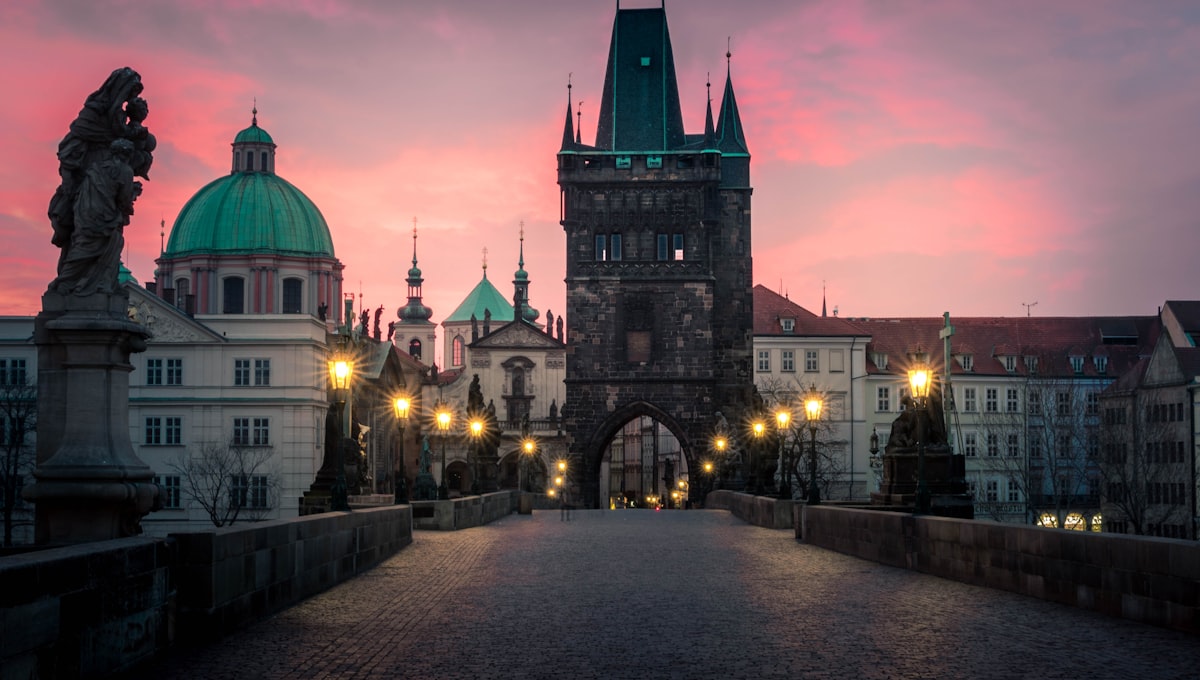
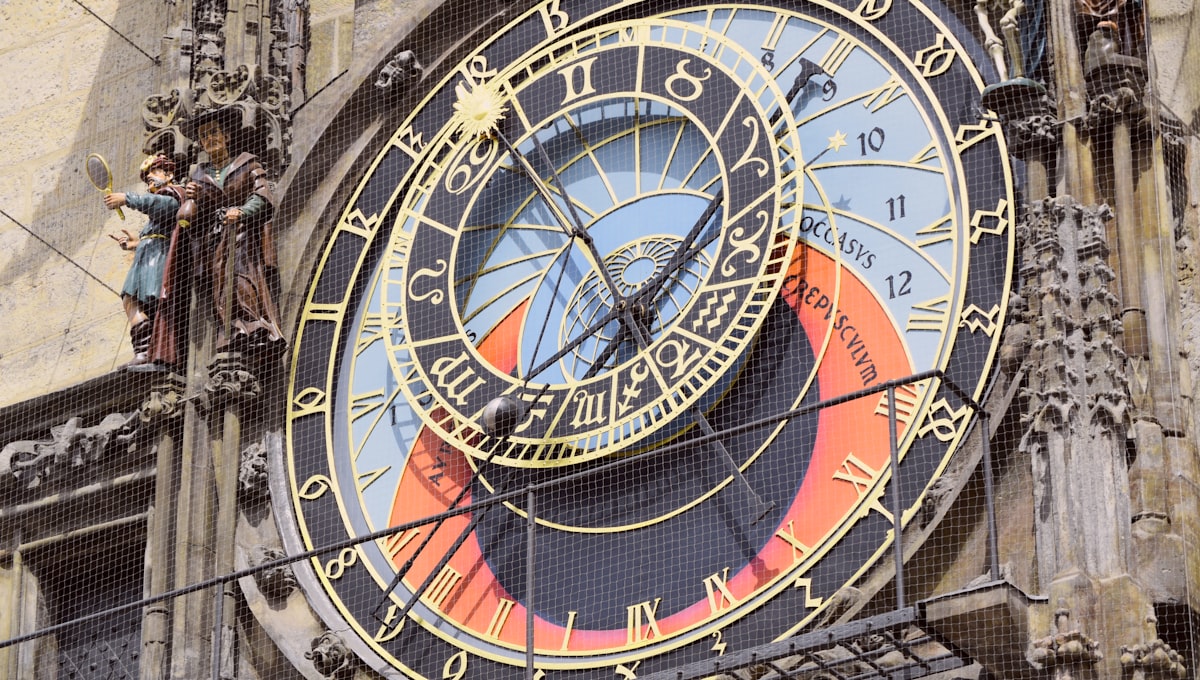
The historic core of Prague — Old Town, Malá Strana, Hradčany — is genuinely magnificent and should not be skipped. The Charles Bridge at dawn, with the castle above and the mist on the Vltava, is one of Central Europe's great views. The Old Town Astronomical Clock is genuinely medieval and still functioning. The castle district on a clear afternoon commands a view over the city's red rooftops that justifies the walk uphill.
Go early. The Charles Bridge is manageable before 8am; by 10am it's a shoulder-to-shoulder tourist conveyor belt. Do the tourist core as a morning walk, eat breakfast before you go (or bring food), then escape to the neighborhoods that actually have Prague's soul — and its prices.
Vinohrady: Where the City Actually Lives
Vinohrady, directly east of the New Town and walkable from Wenceslas Square, is the single best neighborhood in Prague for eating, drinking, and staying affordably. It's a residential area of late 19th-century apartment buildings, independent coffee shops, wine bars, and a remarkable density of good restaurants. This is where younger Praguers who aren't in the hospitality industry eat dinner.
Náměstí Míru (Peace Square), Vinohrady's central square, is ringed by a Saturday farmers market, a neo-Gothic church, a tram terminus, and enough café options to fuel an entire weekend. Two streets east is Mánesova and then Blanická — a stretch of independent restaurants, natural wine bars, and bakeries that would cost three times as much in Paris or London.
Specific recommendations in Vinohrady: Eska (Křižíkova 34, technically in Karlín but a quick walk) for modern Czech small plates; Nota Bene for natural wine; Café Savoy for a splurge-appropriate weekend breakfast that remains well under what you'd pay in Vienna for comparable quality. A sit-down dinner with wine in Vinohrady runs 600–900 CZK per person ($26–38), which is budget by Prague's restaurant quality tier.
Žižkov: Cheap Pubs, the Best Radio Tower, Genuine Grunge
Žižkov, the hill east of Vinohrady, is Prague's traditional working-class pub neighborhood and still has the prices to show for it. Beer in Žižkov runs 40–60 CZK for a half-litre — under $2.50 — in the local pivnices (pub-bars) that line the side streets. The neighborhood has the highest density of pubs per capita in Prague, which was historically the highest in Europe, and several of them have been running since the early 1900s without significant cosmetic changes.
The Žižkov Television Tower, a 216-meter brutalist structure covered in crawling giant baby sculptures by artist David Černý, has a rotating restaurant and observation deck. The views over the city are genuinely excellent and less crowded than the castle viewpoints. The tower also has a hotel room inside — one singular room suspended on the antenna mast at 80m, bookable as a novel experience.
Žižkov is also home to the Vítkov National Memorial, a striking functionalist complex with a colossal equestrian statue of Jan Žižka (the one-eyed medieval general the district is named after — the statue is the third-largest bronze equestrian in the world). The memorial and its small museum cost almost nothing to visit.
Holešovice: Galleries, Markets, and the Best Budget Food Hall
Holešovice, north of the center across the Vltava, is Prague's emerging neighborhood — galleries, design studios, converted industrial buildings, and Manifesto Market, a container-based pop-up market with rotating food vendors that runs spring through autumn. Prices at Manifesto are honest: Vietnamese bánh mì for 120 CZK, Korean fried chicken for 180 CZK, Czech smažák (fried cheese sandwich) for 90 CZK.
The Prague Market (Pražská tržnice) is the city's main wholesale and farmers market, operating in a sprawling complex of historic market halls. Arrive Saturday morning for fresh produce, local cheese, and the sight of a working city market that hasn't been sanitized for tourists.
DOX Centre for Contemporary Art in Holešovice is one of the most interesting gallery spaces in Central Europe — admission runs 180–220 CZK ($8–10) and the programming consistently features Central and Eastern European artists who don't get much exposure in Western galleries.
Transport: Don't Pay for Taxis
Prague's public transit (metro, trams, buses) is reliable, frequent, and very cheap. A 24-hour pass costs 120 CZK ($5.20). A 3-day pass is 330 CZK ($14). Trams are the best way to move around the central city; the metro handles longer cross-town journeys.
Tram 22 is the most useful tourist route — it runs from the center through Malá Strana, up to the castle district, and out to Vinohrady, covering the best sightseeing corridor in a single ticket. Ride it end-to-end once to orient yourself.
The airport is connected by bus to the city center (Bus 119 to Nádraží Veleslavín metro, then metro into town) for 40 CZK each way. There is no reason to pay 700–1,000 CZK for a taxi from Václav Havel Airport unless you have excessive luggage and zero interest in saving money.
Beer: Pilsner Urquell Isn't the Cheapest Option
Czech beer is famously cheap and the quality is genuinely high — Czech brewing technology and the Saaz hop variety set a global benchmark. But there's a local secret: the cheapest and often the best pivo in Prague isn't Pilsner Urquell or Budvar (Budweiser Budvar). It's the un-marketed tank beer (tankové pivo) drawn directly from conditioning tanks, served in neighborhood pivnices in Žižkov, Holešovice, and Smíchov. Prices run 35–50 CZK for a half-litre. Kout na Šumavě, Únětický pivovar, and Bernard are the local names to look for.
Where to Sleep Without Paying Tourist Core Rates
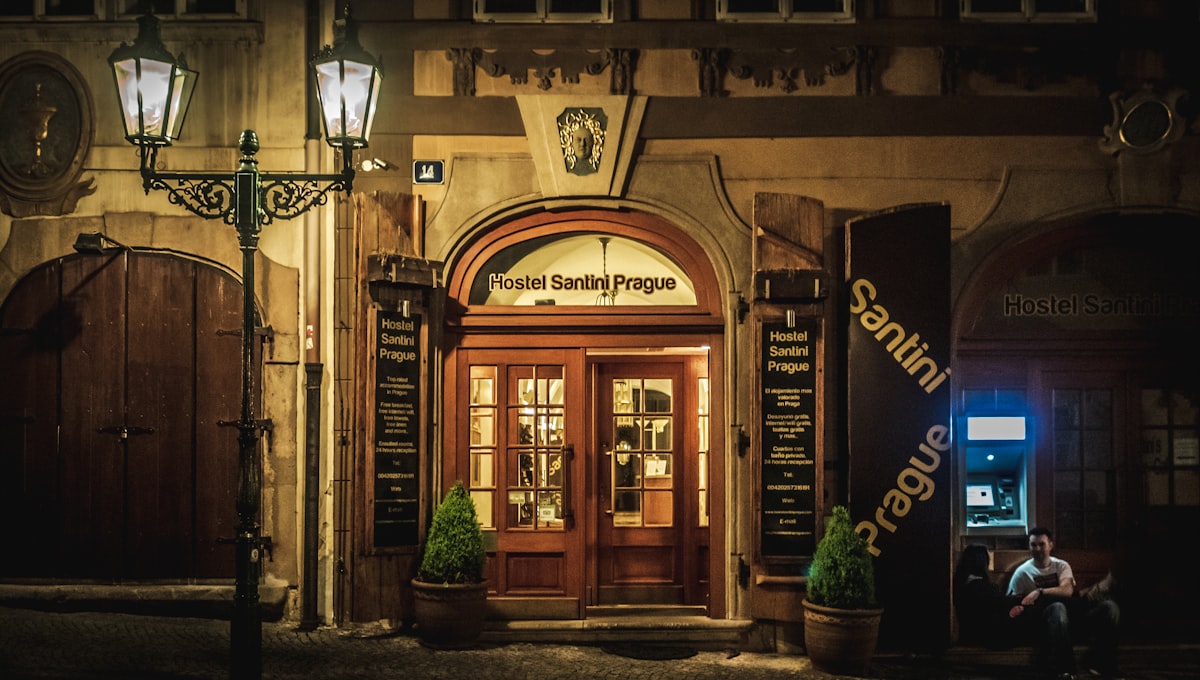
The most expensive accommodation in Prague is in Staré Město (Old Town) and Josefov. These neighborhoods have the views and the medieval atmosphere, and they command prices to match: budget hotels start at $90–120 per night, boutique hotels at $150–250. Unless the morning view of the Týn Church from your window is the specific point of your trip, there's no financial reason to stay here.
Better value areas for accommodation: Vinohrady and Žižkov have a dense stock of Airbnbs and boutique guesthouses in apartment buildings, typically $55–90 per night for a private double. Holešovice has newer hostels and guesthouses in converted industrial spaces — dorms from $20, private rooms from $50. Smíchov, southwest of the center, is residential and quiet with metro access on line B; hotels here run $60–90 for a private room.
The sweet spot is a guesthouse or Airbnb in Vinohrady with 15-minute tram access to Old Town. You get a real neighborhood base, significantly lower prices, and the ability to walk to restaurants that aren't operating on tourist-trap economics.
Music and Culture Without the Club District
Prague has a reputation for stag parties and nightclub tourism that somewhat obscures its genuine cultural life. The city has a strong classical music scene — the Czech Philharmonic at Rudolfinum is world-class and tickets run 400–900 CZK ($17–39) for most concerts, which is a fraction of comparable tickets in London, Vienna, or Paris. The Rudolfinum building itself, a neo-Renaissance concert hall on the Vltava bank, is worth seeing regardless of what's being performed.
Cross Club in Holešovice is one of the best independent music venues in Central Europe — a labyrinthine space of industrial sculpture, outdoor terraces, and multiple stages running techno, jazz, drum and bass, and experimental music through the week. Entry runs 100–200 CZK ($4–9) for most events.
The Jazz Dock, moored on the Vltava in Smíchov, hosts nightly live jazz on a floating venue — entry 150–250 CZK. Acoustic Prague and Reduta Jazz Club are the other main jazz venues. Prague's jazz scene punches significantly above its size.
Saving on Flights to Prague
Prague Václav Havel Airport (PRG) is well-connected across Europe with direct services from almost every major hub. From London, easyJet (EZY) and Ryanair (RYR) run regular direct services; budget fares in the £40–90 one-way range are common outside peak season. From the US, the most common routing is through a Western European hub — Frankfurt (FRA), Amsterdam (AMS), or Vienna (VIE) — on Lufthansa (LH), KLM (KL), or Austrian (OS).
One underused angle: Prague is often cheaper to book through Eastern European regional markets than through Western European or North American ones. Polish, Czech, and Slovak regional versions of Skyscanner can show meaningfully lower fares than UK or US versions for the same itinerary. RegionFare checks this automatically across 97 regional markets, which is particularly useful for Central European routes where the pricing spread between markets tends to be larger than on heavily-competed Western European corridors.