

Cheapest Flights to Bangkok: A Season-by-Season Breakdown
April 30, 2026
Bangkok prices from London right now sit at £420 return on Thai Airways (TG). Book the same route two months later in November, when the cool season begins, and that same route costs £720. The spread isn't just seasonal — it's also deeply regional, and understanding both layers together can save you several hundred pounds on a single trip.
The Cool Season Premium (November to February)
Koh Samui has blue skies. Chiang Mai has perfect temple weather. The Grand Palace isn't a sweat-soaked ordeal. Every European and American travel editorial recommends November through February as the ideal window to visit Thailand, which is exactly why fares inflate so sharply during this period. Demand is concentrated, seat capacity doesn't scale as fast as desire, and airlines know it.
LHR–BKK in late November typically runs £650–£780 return on direct services. TG and EVA Air (BR) via Taipei are the two most common options from London. During peak cool season, expect a 35–45% premium over the annual average. The same spike plays out from Frankfurt (FRA), Paris (CDG), and Amsterdam (AMS). German travelers face an additional squeeze because Lufthansa (LH) codeshares on TG flights and tends to price-match rather than undercut, reducing downward fare pressure on the German market.
One underrated move during November: fly into Don Mueang (DMK) instead of Suvarnabhumi (BKK). AirAsia (AK) and Nok Air operate out of DMK, and connecting through Kuala Lumpur (KUL) or Singapore (SIN) in November can shave £80–£120 off the total. It adds three hours but avoids the peak-season fare loading on the nonstop. Don Mueang is also served by a direct rail link into the city since 2023, so the ground transport penalty is now minimal.
December fares spike a second time around the Christmas and New Year period. December 22–January 4 is peak-of-peak: LHR–BKK on this window regularly exceeds £900 return. Experienced travelers either book six months ahead to lock lower inventory, or they skip this window entirely and fly in early January when prices correct sharply — a January 7 departure can cost £350 less than a December 27 departure on otherwise identical routing.
The Monsoon Window (May to October)
May is universally misunderstood. Yes, Bangkok gets afternoon rain. No, it is not uninhabitable. The city functions perfectly well in the rainy season — temples, food markets, and rooftop bars are indoors or covered, and the tourist crowds thin out dramatically. Khao San Road is tolerable again. The weekend markets at Chatuchak are spacious rather than impenetrable. That's reflected in the pricing.
LHR–BKK in June: £390–£470 return. CDG–BKK in July: €380–€440. SYD–BKK in May, which is one of the busiest long-haul leisure routes in the Asia-Pacific, can be booked for AUD 1,050 return versus AUD 1,650 in January. That's a 57% swing on essentially identical flights operated by Qantas (QF) and Thai Airways on interline agreements.
September and October are the wettest months, and also the cheapest. If your trip is Bangkok-focused rather than beach-focused — street food on Yaowarat Road, day trips to the ancient capital of Ayutthaya 80km north, the floating markets at Damnoen Saduak — there's almost no practical downside to visiting in September. Fares from European hubs regularly drop below £350 return during this window. Even the typically premium-priced Singapore Airlines (SQ) via Changi (SIN) runs competitive fares in this period.
Where You Book Changes the Price

Here's the part most travelers miss entirely: even for identical flights on the same airline with the same baggage allowance, the price varies depending on which regional version of the booking site you use. A TG ticket from LHR to BKK priced at £620 on the UK version of Skyscanner might appear at €590 on the German version, or at ₺19,400 on the Turkish version — which, at current exchange rates, is roughly £480. Same seat, same booking conditions, same IATA e-ticket number. The difference is which regional fare bucket you accessed.
This happens because airlines file different fares into GDS (Global Distribution Systems) with point-of-sale codes. A fare filed for "GB" (Great Britain) point of sale may be at a higher tier than the same flight class filed for "TR" (Turkey) point of sale, reflecting purchasing power differences, local market competition, and demand elasticity in each country. It's been standard airline practice for decades.
RegionFare checks prices across 97 regional markets simultaneously, so you're not guessing which market is cheapest today — the comparison surfaces the lowest available regional price automatically. On Thai routes specifically, markets worth examining include PL (Polish złoty fares are consistently competitive on European–Asia long-haul), TR (Turkish lira pricing benefits from lower local demand and currency differentials), and IN (Air India codeshares introduce Indian rupee fare buckets that can translate to meaningfully cheaper prices when converted). The variation by market on a LHR–BKK return can be as wide as £150–£200 at any given moment.
The Departure City Question
Not all European gateways are equally priced for Bangkok. Rome (FCO) and Milan (MXP) frequently have cheaper BKK fares than London or Frankfurt, driven by competitive pricing from Emirates (EK) via Dubai (DXB) and Qatar Airways (QR) via Doha (DOH). Both Gulf carriers compete aggressively for the Italian leisure market and price accordingly. A positioning flight from London to Rome can be as little as £40–£60 return, and if the total package saves £150, the arithmetic clearly works.
Amsterdam (AMS) and Madrid (MAD) are also worth pricing independently. KLM (KL) and Iberia (IB) occasionally run promotional fares to Bangkok on their respective hub routes that undercut the London market by 10–15%. When you factor in positioning flights, the savings may not always materialise — but for travelers who live within reasonable distance of these airports, checking both directly is worthwhile.
From the US East Coast, JFK–BKK is served by several one-stop options: Cathay Pacific (CX) via Hong Kong (HKG), SQ via Singapore (SIN), EK via Dubai (DXB), and TG via various hubs. The lowest published fares cluster around $750–$900 return in the shoulder season (March–April, October). West Coast travelers have a structural advantage — LAX has more nonstop options to Asia and fares to BKK tend to be $50–$100 cheaper than JFK equivalents, with a shorter total journey time via the Pacific routing.
From Australia, the SYD–BKK route is one of the most heavily competed in the Southern Hemisphere. Jetstar (JQ), AirAsia, and Thai AirAsia X all operate the route at budget fares, with QF and TG providing the full-service options. In the May–August shoulder season, AUD 700–900 return is achievable on budget carriers. The regional pricing effect is also pronounced on this route: the Australian market Skyscanner version and the Thai market version of the same search sometimes differ by AUD 80–120 on identical Jetstar tickets.
Shoulder Season Is the Real Sweet Spot
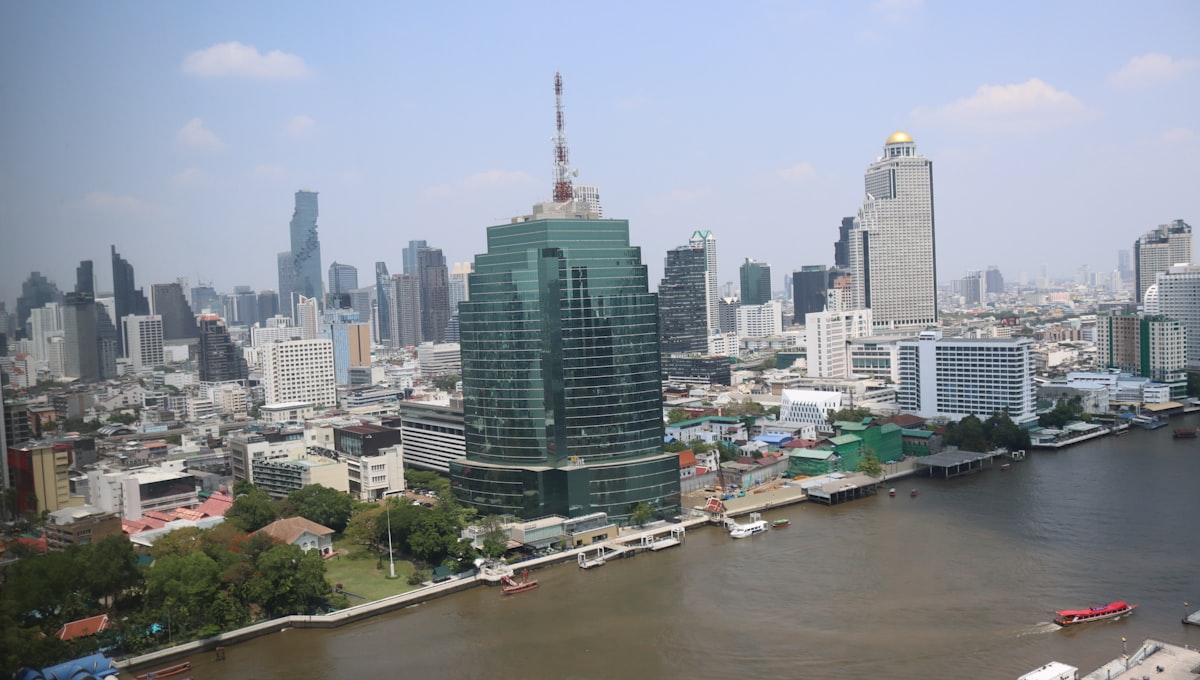
March and April sit between the cool season and the monsoon. Songkran (Thai New Year) falls in mid-April and drives a sharp one-week spike in fares around April 12–15 — hotels in Bangkok and Chiang Mai simultaneously triple their rates, and the water festival fills every street with revelers and tourists in equal measure. The weeks on either side, however, are some of the best value in the calendar.
Prices in early March and late April are 15–25% below the November–February peak. Weather is warm and mostly dry in March; late April is humid but the Songkran crowds have dispersed. Hotel rates have corrected. From Sydney, this window produces AUD 900–1,050 return on QF codeshares via SIN — competitive with budget carriers. From Tokyo (NRT), March brings sub-¥60,000 return fares — roughly $400 — on TG or THAI Smile.
Practical Booking Timeline
For cool season travel (November–February): book four to five months ahead. By August, premium cabin availability tightens and economy fares climb quickly on popular services. The TG LHR–BKK nonstop is particularly prone to early sellout of promotional fare buckets. For monsoon travel (June–September): six to eight weeks ahead is usually fine. There's no capacity crunch, and last-minute prices in this window are sometimes lower than advance fares as airlines try to fill unsold seats. For Songkran: either book three months ahead to lock the week before or after at normal prices, or plan around the spike entirely.
The most consistent savings come from combining three levers: booking in the shoulder or monsoon window, departing from the cheapest gateway for your region, and checking multiple regional markets before committing to a price. No single variable gives you the full picture — but the combination of all three on a return Bangkok trip regularly produces savings of £150–£300 compared to booking through a single domestic channel without checking alternatives.
What to Do Once You're There
A practical note for first-time visitors: the BTS Skytrain covers Siam, Asok, and Ekkamai — the key neighborhoods for eating, nightlife, and shopping. The MRT underground metro covers Sukhumvit and connects to Chatuchak Weekend Market. A single-journey token costs ฿17–42 depending on distance. The Rabbit Card (BTS top-up card) makes the journey frictionless.
Street food remains the best food in the city. The vendors on Yaowarat Road in Chinatown serve roast duck that outcompetes any restaurant in the vicinity. The boat noodle alley near Victory Monument is a 30-minute metro ride but worth it for a cheap lunch. Khanom buang — crispy Thai crepes sold from carts for ฿20 — are one of the better things to eat in Bangkok regardless of price, which is saying a great deal given the competition from pad thai, khao man gai, and the vast street grilling operations that start up on every corner after dark.
Budget: a week in Bangkok eating properly, staying at a mid-range hotel in Sukhumvit or Silom, using public transport, and visiting temples and museums runs roughly £800–£1,100 per person including flights booked through the cheapest regional market. The same week booked without any price comparison — flights through a single UK-only tool, hotel through one OTA at face value — typically costs £1,100–£1,400. The difference funds a day trip to Kanchanaburi and the Death Railway with a private guide, and still leaves money for a cocktail at a rooftop bar overlooking the Chao Phraya at sunset.