Dubai Flights: Round-Trip vs Two One-Ways — Which Saves More

You're planning a trip to Dubai and you've found a round-trip fare that looks reasonable. But then you notice something: a one-way outbound ticket is listed at a surprisingly low price, and so is the return leg — and combined they undercut the round-trip by a noticeable margin. Or is it the other way around? Which structure actually saves more money on Dubai flights? The answer changes more often than most travelers realise, and it depends on the carrier, the market you're booking from, and how flexible you're willing to be.
This guide breaks down exactly when round-trips win, when two separate one-ways beat them, and how layering in a cross-market booking strategy — the kind RegionFare is built for — can squeeze out even more savings on either approach.
The Traditional Case for Round-Trips
For most of aviation history, round-trip tickets were straightforwardly cheaper. Airlines designed their pricing systems to reward commitment: if you lock in both legs with one carrier, they fill two seats at once, cut down on revenue uncertainty, and are happy to shave the price. Legacy carriers like Emirates and Etihad still build this assumption into their published fare structures, and for many routes it holds.
On intercontinental routes into Dubai — flights from the US, Canada, or Australia — round-trips from a single carrier often come in well below the cost of two separately purchased one-ways on the same airline. A New York (JFK) to Dubai (DXB) round-trip on Emirates might list between $700 and $1,500 depending on season and how far out you book, while buying the outbound and return separately on the same airline can push that noticeably higher. The same logic applies on long-haul routes from East Asia and Latin America.
Carriers that operate hub-and-spoke networks out of Dubai — Emirates and Etihad especially — also bundle better baggage allowances and easier rebooking into their round-trip fares. If your trip involves tight connections or any risk of disruption, having a single-carrier round-trip ticket means one airline is responsible for getting you through.
When Two One-Ways Win (Surprisingly Often)
The picture changes significantly on short- and medium-haul routes, and it changes even more once budget carriers enter the mix. From most of Europe, FlyDubai, Wizz Air, and Ryanair (on some routes) have made one-way fares their core product. These carriers price each direction independently, and round-trip fares on their own sites are simply two one-ways added together — there's no discount for buying both.
On a route like London (LGW or LTN) to Dubai (DWC), a Wizz Air one-way can often be found in the £80–£180 range, and buying two separately will frequently match or beat any "round-trip" package the same carrier offers. The same pattern appears on routes from Warsaw, Budapest, Vienna, and other Central European cities that FlyDubai and Wizz Air both serve heavily. From mainland Europe, round-trips on full-service carriers like Turkish Airlines or Pegasus typically come in between €300 and €600, but splitting the legs — especially during shoulder season — can occasionally come in lower if you catch a sale on one direction.
Where two one-ways most reliably win is when the cheapest outbound and the cheapest return fall on different airlines. There's no round-trip fare that bridges two carriers, so the only way to capture the best price on each direction is to book them independently.
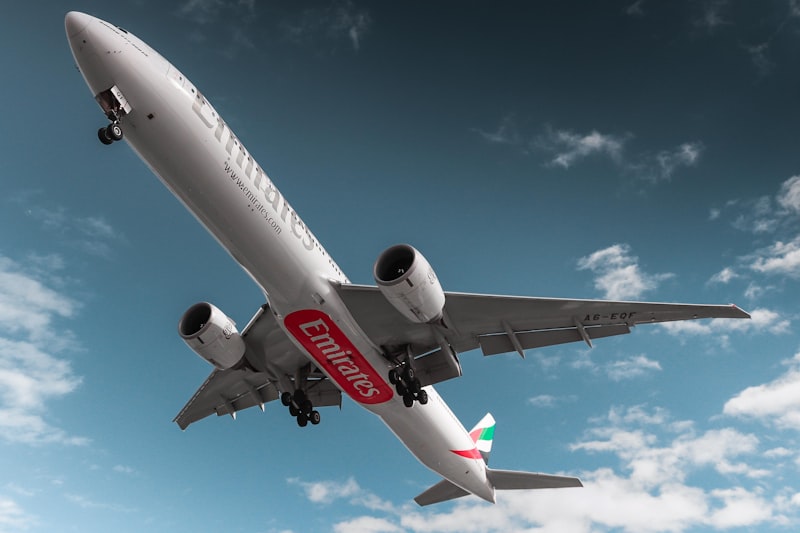
Mixing Carriers for Maximum Savings
This is where the strategy gets genuinely interesting. Dubai is one of the best-connected airports in the world, served by a dense web of carriers that compete for the same passengers on many routes. That competition creates pricing mismatches you can exploit.
Consider a traveller flying between the UK and Dubai. Emirates might have the best outbound price on a specific date — say, a direct from Heathrow with a competitive sale fare. But for the return, FlyDubai (Emirates' low-cost sister airline, which shares a code but prices independently) might have a one-way at a fraction of the legacy fare. Booking each leg separately captures both deals in a way that no single round-trip ticket can.
Other useful carrier combinations for Dubai:
- Emirates outbound + FlyDubai return: Leverage Emirates' capacity on peak outbound days, return on FlyDubai's aggressive pricing.
- Turkish Airlines outbound + Pegasus return: Both fly through Istanbul to Dubai. Turkish's sales are strong, Pegasus prices are structurally lower.
- Etihad outbound + Wizz Air return: Etihad out of Abu Dhabi (a short bus or taxi from Dubai) combined with Wizz Air into Dubai World Central.
- Lufthansa/BA outbound + FlyDubai return: Full-service quality on the way there, budget pricing on the way back when flexibility matters less.
The practical caveat: mixing carriers means you carry the risk of missed connections. If your outbound is delayed, no airline will rebook you onto another carrier's return flight. Always leave a buffer of at least one overnight between legs if the trip involves tight scheduling.
Booking Country Matters Too
Here's a factor most travellers miss entirely: the country you're booking from affects the price of each leg independently — and the cheapest country for your outbound may not be the cheapest for your return.
Airlines and booking platforms use regional pricing, meaning the same seat can be listed at different prices depending on which country's version of Skyscanner, Kiwi, Kayak, or Momondo you're using. We've seen this in our own data at RegionFare: a Dubai to London flight priced at £280 on the UK's Skyscanner might show as the equivalent of £240 on the Israeli or Polish version of the same platform — for the identical flight, same date, same class. The reasons for this are structural: airlines set different base fares by market, OTAs operate with different margins across countries, and purchasing-power adjustments shift prices depending on the local economy.
When you're booking two one-ways, this effect compounds. You can independently optimise the booking country for each leg, potentially finding a cheaper market for the outbound and a different cheaper market for the return. With a round-trip on a single carrier, you're locked into one booking context for both.
RegionFare searches across 97 country markets simultaneously for both Skyscanner and other platforms. On a typical Dubai search, the spread between the most expensive market price and the cheapest can range from 10% to 25% or more depending on the route and season. On a £500 round-trip, that's potentially £50–£125 back in your pocket — just from choosing the right booking market.
Compare Dubai flights across 97 markets and providers
Try RegionFare FreeHow to Test Both Options for Your Trip
The cleanest way to compare round-trip vs two one-ways is to run both searches in parallel and use the same cross-market tool for each. Here's a practical workflow:
- Search the round-trip first. Run your full round-trip search on RegionFare to find the cheapest market price for the combined fare. Note the total.
- Search each one-way separately. Run the outbound as a one-way search, then run the return as a separate one-way. Each search will show the cheapest market price for that individual leg.
- Add the two one-ways together. Compare the combined total to the round-trip price from step one.
- Check carrier mix. If the cheapest outbound and return are on different airlines, you're automatically in two-one-way territory — no round-trip exists to compare.
- Factor in extras. Baggage fees differ between carriers. A one-way on FlyDubai with a checked bag might cost more than it appears at first glance. Factor in total cost, not just the base fare.
This comparison takes about five minutes and will tell you definitively which structure is cheaper for your specific dates and route. Prices shift constantly — what's true today won't necessarily be true next week — so it's worth running the comparison fresh each time rather than assuming one approach always wins.
The Bottom Line
Neither round-trips nor two one-ways are universally cheaper for Dubai flights. Round-trips tend to win on long-haul routes from the Americas, Australia, and East Asia, especially when booking with a full-service carrier like Emirates or Etihad. Two one-ways tend to win on short- and medium-haul European routes, particularly once budget carriers like FlyDubai, Wizz Air, and Pegasus are in the mix — and they're the only option when you want to combine carriers to capture the best price on each leg independently.
The biggest lever most travellers leave untouched, though, is the booking country. Regional pricing means the same flight can cost meaningfully less depending on which country's booking platform you use. Checking this — automatically, across 97 markets at once — is exactly what RegionFare does. Whether you're buying a round-trip or two one-ways, starting your Dubai flight search there gives you the best chance of finding a price that most travellers never see.