
Hidden Gems in Portugal: 7 Places Beyond Lisbon and Porto
May 5, 2026
Portugal has experienced one of Europe's most dramatic tourism growth curves over the past decade. Lisbon now faces the same over-tourism pressures as Barcelona and Amsterdam; Porto's historic center can feel overwhelmed on summer weekends. The good news is that Portugal is geographically diverse and culturally rich beyond its two headline cities, and many of its most compelling destinations remain accessible, affordable, and uncrowded. These seven are worth the effort.
1. Évora, Alentejo
Évora is the capital of the Alentejo region — the vast interior plateau of cork oaks, wheat fields, and whitewashed villages that covers a third of Portugal. The city is a UNESCO World Heritage Site with a Roman temple (the Temple of Diana, 1st century AD, still standing with intact columns) in the town square, a medieval cathedral, and the Igreja de São Francisco containing the famous Capela dos Ossos — a chapel lined with the bones of 5,000 monks, used as a memento mori. The bones are not kitschy or exploitative; the space is austere and genuinely affecting.
Évora is two hours by train from Lisbon (€12.80) or 1.5 hours by bus. The old city is entirely walkable in a day. Restaurants in Évora serve Alentejo cuisine — slow-cooked pork with clams (carne de porco à alentejana), açorda (a bread-based soup with poached egg), and the region's own wine — at prices that feel like a decade ago in Lisbon: a full dinner with wine, €20–30 per person.
2. Sintra, but Done Properly
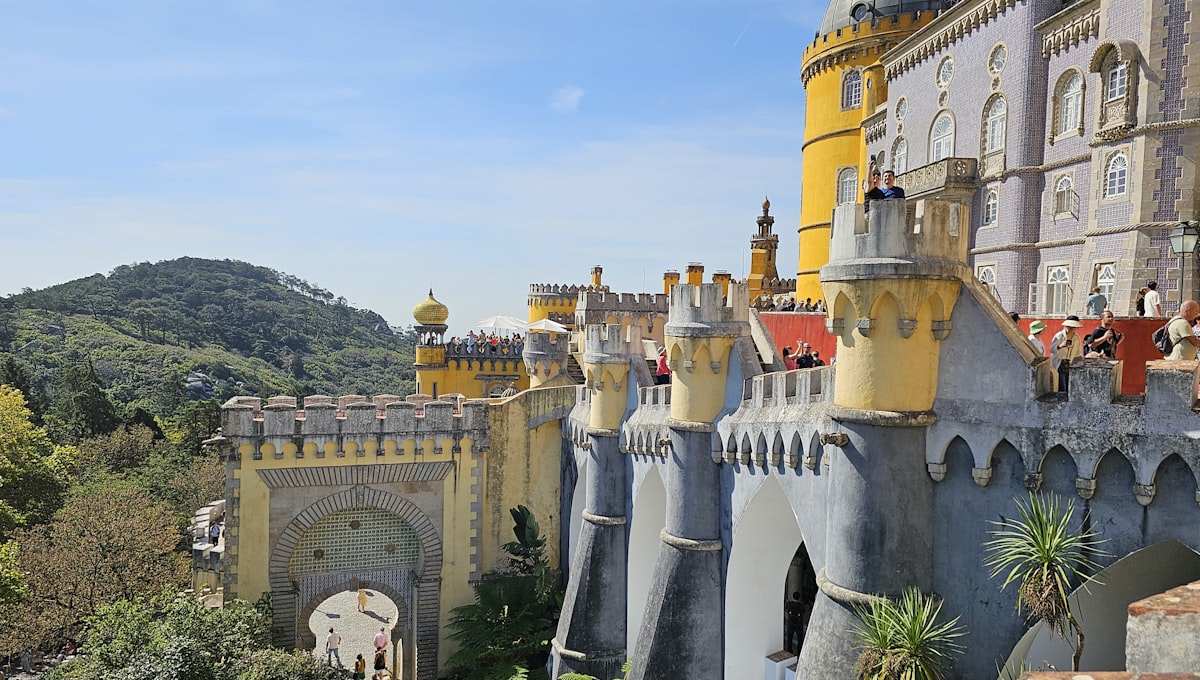
Sintra is 40 minutes from Lisbon by train (€2.50, runs every 20 minutes) and is therefore included on every tourist itinerary. The Palácio da Pena (the fairy-tale Romanticist palace) regularly sells out a week in advance in summer. What most visitors miss: the rest of the Serra de Sintra is vastly more interesting than the main attractions.
The Convento dos Capuchos — a 16th-century Franciscan monastery built into the rocks of the serra, with cells carved from the hillside cork — is remarkable and receives a fraction of the Pena Palace visitors. The walk from Sintra village to the ruined Moorish castle (Castelo dos Mouros, admission €8) through the wooded hills is one of the better hour-long walks in the country. The Palácio de Monserrate (€8, 30 minutes walk from the village) is architecturally extraordinary — a Victorian fusion of Gothic, Moorish, and Indian styles set in botanical gardens that have been replanting since the 1850s.
3. Óbidos
Óbidos is a medieval walled town 80 kilometres north of Lisbon, fully intact with a 14th-century perimeter wall you can walk around in 30 minutes (free, vertiginous in places). The interior is almost entirely Baroque whitewash and geranium window boxes. It is visited by day-trippers from Lisbon who arrive by bus at 10am and leave by 4pm, which means the town from 5pm to 9am is extraordinarily quiet.
Stay overnight (rooms in the guesthouses inside the walls run €80–130) and you get Óbidos to yourself at breakfast and in the evening when the light is golden and the cafes have cleared. The local speciality is Ginja de Óbidos — a cherry liqueur served in a small chocolate cup (€2) from any of the shops along the main street. The ginja is genuinely excellent.
4. Coimbra
Coimbra was Portugal's capital before Lisbon and is home to one of the world's oldest continuously operating universities (founded 1290). The Biblioteca Joanina — the 18th-century university library with lacquered bookshelves, gold-leaf ceilings, and a colony of bats that eat the insects that would otherwise damage the books — is one of the most beautiful rooms in Europe. Entry is timed and must be booked (€3 for the library, €12.50 for the full Old University complex).
Coimbra is three hours by train from Lisbon (Alfa Pendular, €24), one hour from Porto. It has a Fado tradition entirely its own — Coimbra Fado is sung only by men, only to academic texts, only in the traditional black academic cape. The universities' student culture keeps the restaurants and bars genuinely local and reasonably priced.
5. Alqueva, Alentejo Dark Sky Reserve
Alqueva is Europe's first Dark Sky Reserve, built around the largest artificial lake in Western Europe. The reservoir (created in 2002 by a dam on the Guadiana river) has transformed what was previously scrubland into a sailing and stargazing destination. There are no significant tourist crowds; the accommodation runs to small rural lodges and a handful of lake-view rooms.
The reason to go: on a clear night (which, in the Alentejo, describes most of the year) the Milky Way is visible overhead in a way that becomes unavailable the moment you're within 80 kilometres of a major city. Dark Sky Tours operate out of the village of Monsaraz — a hilltop medieval village overlooking the reservoir — with telescopes and guided sessions (€15–25 per person). Monsaraz itself has a castle, a bullring, and fewer tourists than any comparable medieval Portuguese village.

6. Tavira, Eastern Algarve
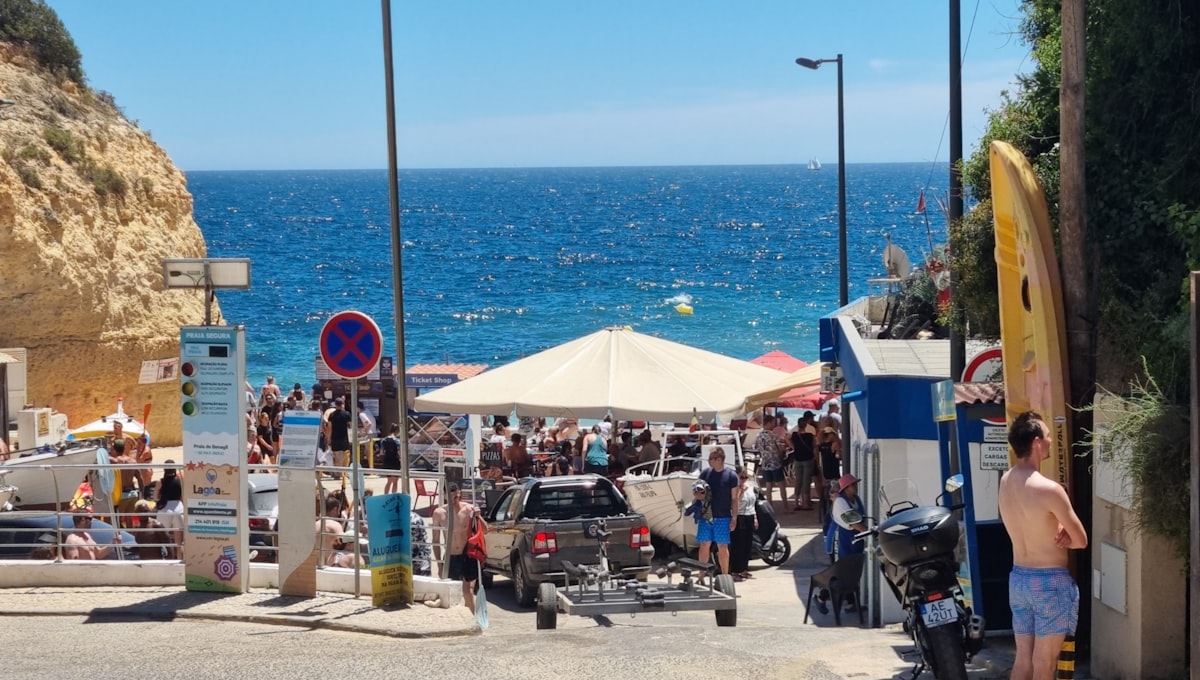
Most visitors to the Algarve end up in Albufeira, Lagos, or Faro — the commercial centers of the western and central coast. Tavira, at the eastern end near the Spanish border, is the Algarve that existed before mass tourism: a river town built on the Gilão river with a Roman bridge, 37 churches, and access via ferry boat to the barrier island beaches of Ilha de Tavira (€2 return).
Ilha de Tavira is a long sandy beach island with no roads, no cars, and no development beyond a few beach bars and rental chairs. The ferry runs from April through October. Tavira's restaurants serve what the Algarve coast used to serve everywhere: fresh grilled fish, cataplana (seafood stew in a copper clam-shell pot), and genuinely affordable prices. Accommodation in Tavira is 30–40% below equivalent quality in Albufeira or Lagos.
7. Braga
Braga is Portugal's third city and arguably its most underrated. Known primarily for the Bom Jesus do Monte — a Baroque hilltop sanctuary reached either by funicular (€2) or via an ornate staircase of zigzagging granite steps — it also has one of Portugal's best-preserved medieval city centers and a university-driven nightlife and restaurant scene that feels entirely local.
The Museu dos Biscainhos (€2, municipal museum in an 18th-century aristocratic palace) is the kind of hidden-gem museum that repays two hours of unhurried attention. The garden behind the museum, with its ornamental tiling and formal planting, is one of the more charming spaces in northern Portugal.
Braga is 50 minutes from Porto by Alfa Pendular (€7.50) or one hour by regional train (€3.50). It makes an easy day trip from Porto or a natural staging post for travel into the Minho region.

Getting Around Without a Car
Portugal's rail network covers Lisbon–Porto–Braga–Coimbra efficiently. The Rede Expressos bus network covers Évora, Óbidos, and many Alentejo destinations more cheaply than rail. Tavira and Alqueva require either a car or a combination of bus and taxi.
Flights
Portugal has two main airport gateways: Lisbon (LIS) and Porto (OPO). Both are well-connected from the UK and Ireland (Ryanair, TAP, easyJet), and fares from London to either airport regularly fall below £80 return in the off-season months. Faro (FAO) in the Algarve is useful if your primary destination is the eastern Algarve. Regional pricing variation on TAP and on OTA booking platforms can yield additional savings — RegionFare checks all market versions on Portuguese routes, where the domestic Portuguese market frequently produces lower fares than the UK default.