
Hidden Gems in South Korea: 6 Places Beyond Seoul
April 30, 2026
Seoul is one of the world's great cities — a place of genuine depth with neighborhoods that take years to understand properly. But staying in Seoul for an entire trip to South Korea is like visiting the UK and never leaving London. The country is compact, extraordinarily well-connected by the KTX high-speed rail network, and rewards exploration with a version of Korean life that the capital's relentless modernity has largely erased.
The six places below are reachable by KTX or domestic flight within a few hours of Seoul. None of them are obscure to Korean travelers — Jeonju and Gyeongju are well-established on the domestic circuit — but they remain genuinely quiet by the standards of what a country of that quality would attract elsewhere.
Getting Around: KTX, ITX, and the T-Money Card
Before the destinations, a word on logistics. South Korea's rail system is among the best in the world. KTX high-speed trains connect Seoul to Busan in 2 hours 15 minutes, to Gyeongju in under 2 hours, and to Yeosu (near Suncheon) in about 3 hours. Book KTX tickets through Korail's website or the Korail app. Advance booking is strongly recommended for weekend travel; trains during Chuseok (harvest festival, usually mid-September) and Seollal (Lunar New Year) sell out weeks ahead.
The T-Money card is the transit card you need. Loaded with Korean won at any convenience store (GS25, CU, 7-Eleven), it works on the Seoul metro, buses, and taxis across the country. Tap in and out on buses in smaller cities; it makes navigation dramatically simpler than dealing with cash.
For very short hops between cities or routes with inconvenient rail schedules, domestic flights are genuinely cheap. Air Seoul, Jeju Air, and T'way Air connect Seoul (either Gimpo GMP or Incheon ICN) to regional airports for $25–55 one-way if booked 1–2 weeks in advance.
Gyeongju: The Museum Without Walls
Gyeongju was the capital of the Silla Kingdom for nearly a thousand years (57 BCE – 935 CE) and is sometimes called the "museum without walls" because the royal burial mounds, stone pagodas, and Buddhist temple ruins are simply part of the landscape — on street corners, in parks, in the middle of rice paddies.
The Daereungwon burial mound park in the center of Gyeongju contains 23 royal tumuli — large, grass-covered earthen mounds that hold royal tombs. One is open for entry and the interior reveals the scale of Silla funerary wealth. The Bulguksa Temple, a UNESCO World Heritage Site 16 km outside the city, is one of Korea's most architecturally significant buildings — built in 751 CE and rebuilt after Japanese invasion, with an extraordinary granite staircase and stone pagodas that rank among the finest Buddhist sculpture in Asia.
Rent a bicycle from the city center and ride the 16 km loop through the burial mounds, past Anapji Pond (a restored royal pleasure garden that is at its best at night when lit), and out toward Namsan Mountain, which is dotted with carved Buddhist figures hidden in the rocks and accessible on short walking trails. The entire loop takes about 3–4 hours at an easy pace.
Stay in a hanok guesthouse (traditional Korean wooden architecture) near the burial mounds. Expect $50–80 per night, which is reasonable for a heritage property. Gyeongju is 50 minutes from Busan by KTX and an easy day trip, or better yet, a two-night stay.
Jeonju: Bibimbap, Hanok Village, and Paper
Jeonju is the gastronomic capital of South Korea by popular consensus — the city claims to be the birthplace of bibimbap and takes the claim seriously. Jeonju's version uses a stone pot (dolsot bibimbap), local Hwangpo-myeonon noodles as a garnish, and a bibimbap sauce made from Jeonju's own fermented red pepper paste. Eating bibimbap in Jeonju and then comparing it to what you get in Seoul is like comparing a bowl of pasta in Bologna to one in a London chain restaurant.
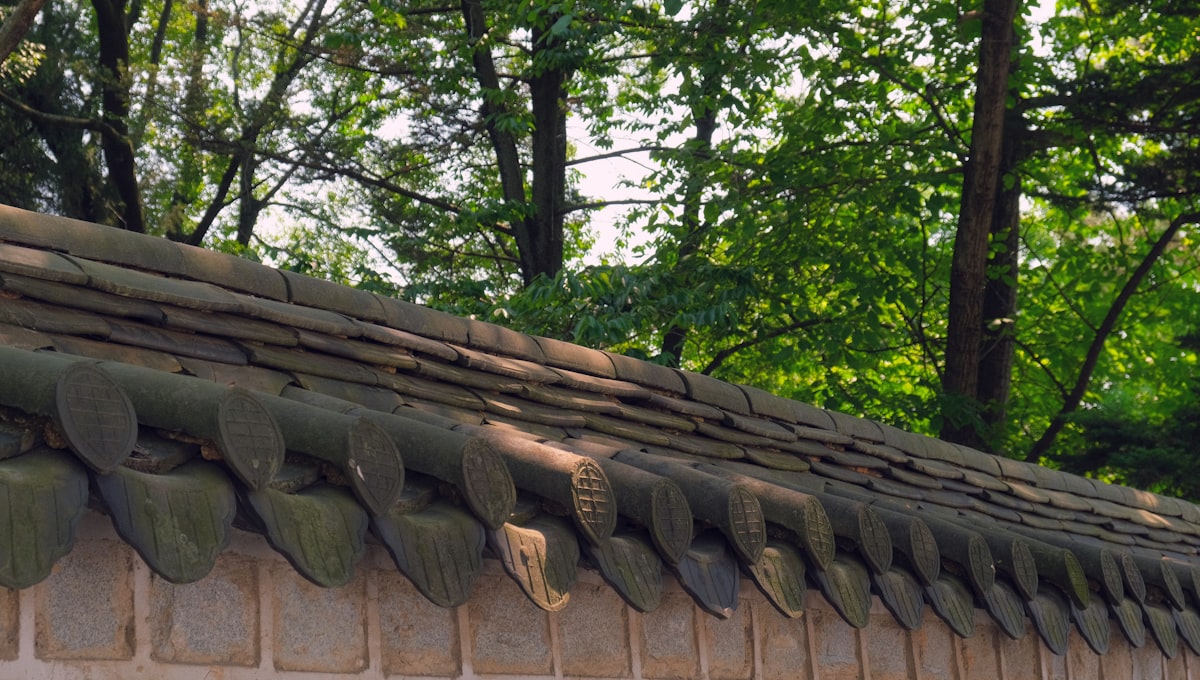
Beyond bibimbap, the hanok village (Jeonju Hanok Maeul) is one of the best-preserved concentrations of traditional Korean architecture in the country — around 700 hanok buildings, a working Catholic cathedral built in 1914 on the site of early Korean Christian martyrdom, and Gyeonggijeon Shrine (housing a portrait of Taejo, founder of the Joseon dynasty). The village is walkable in a morning and less crowded on weekday visits.
Jeonju is also historically the center of Korean hanji (traditional handmade paper) production. The Jeonji Hanji Museum explains the craft in detail; you can also try making paper in the workshop.
KTX to Jeonju from Seoul takes 1 hour 40 minutes. A weekend trip combining one night in Jeonju with a day trip to the nearby Maisan Provincial Park (twin rocky peaks above a valley filled with stone pagodas) makes an excellent long weekend from Seoul.
Tongyeong: Korea's Little Naples
Tongyeong sits at the southern tip of a small peninsula, wrapped by a harbor filled with fishing boats and connected to a scatter of small islands by regular ferries. It is called "Korea's Naples" for its harbor setting and the quality of its seafood, and the comparison isn't entirely flattering to Naples.
The old town above the harbor has narrow alleys, a covered market selling dried squid, sea urchin roe (uni), and oysters straight from the shells, and some of the best raw fish restaurants in South Korea. A haemul jjim (braised seafood stew) at a harbor restaurant runs 25,000–35,000 KRW ($19–26) and is large enough for two. The cable car from the mainland up to Mireuksan Mountain (461m) gives a view over the harbor, the islands, and on a clear day, the southern sea. Ferry services from the harbor connect to Hallyeo Haesang National Park — the island archipelago's small fishing villages and quiet beaches are a different Korea from the mainland cities.
Getting there: KTX to Jinju, then a local bus or taxi to Tongyeong (about 1 hour). Alternatively, direct intercity buses from Seoul (Express Bus Terminal) run to Tongyeong in about 4 hours.
Suncheon Bay: Wetlands and a View Worth Traveling For
Suncheon Bay Ecological Park is 22 square kilometers of tidal mudflat and reed wetlands on the South Jeolla coast. It is one of the five largest coastal wetland reserves in the world and a critical stopover for East Asian migratory birds — black-faced spoonbills, hooded cranes, and Eurasian wigeons winter here in numbers. The reed beds turn gold and russet in October and November, and the wide, flat estuary landscape is unlike anything else in South Korea's more mountainous interior.
Climb the wooden observation tower above the reeds at dusk for one of the most visually striking landscapes in the country — the silver mudflat, the reed gold, the channel cutting through to the sea, and whatever birds are passing through. It's quiet in a way that urban South Korea rarely is.
Suncheon Garden, adjacent to the bay, is a large public garden created for a world garden expo and now permanently maintained. KTX from Seoul to Suncheon takes about 2 hours 30 minutes.
Gangneung: East Sea, Coffee, and Pine Forests
Gangneung, on the East Sea coast, is where Seoul's coffee culture goes on holiday. The city has an inexplicable density of independent coffee roasters and cafés for its size — the running theory is that the coastal light, pine air, and Haslla Art World overlooking the coast created a scene that attracted creatives, and the cafés followed. Whatever the origin, a morning walking the Anmok Coffee Street (Anmok Haebyon-ro) past a dozen distinctive roasters is a genuinely pleasant experience.
Ojukheon, where Yi I (one of Korea's greatest Confucian scholars, depicted on the 5,000 won note) was born in 1536, is one of the oldest remaining wooden buildings in Korea. The surrounding garden is calm and worth an hour. The Gyeongpo Beach and Gyeongpo Lake complex north of the city is a good sunset walk.
Gangneung rose to international attention as the host city for the 2018 Winter Olympics (the ice events were here, skiing was at nearby Pyeongchang). Getting there: KTX from Seoul Cheongnyangni to Gangneung takes 1 hour 50 minutes — one of the most scenic KTX routes, passing through the Taebaek mountains.
Boseong: The Green Tea Fields
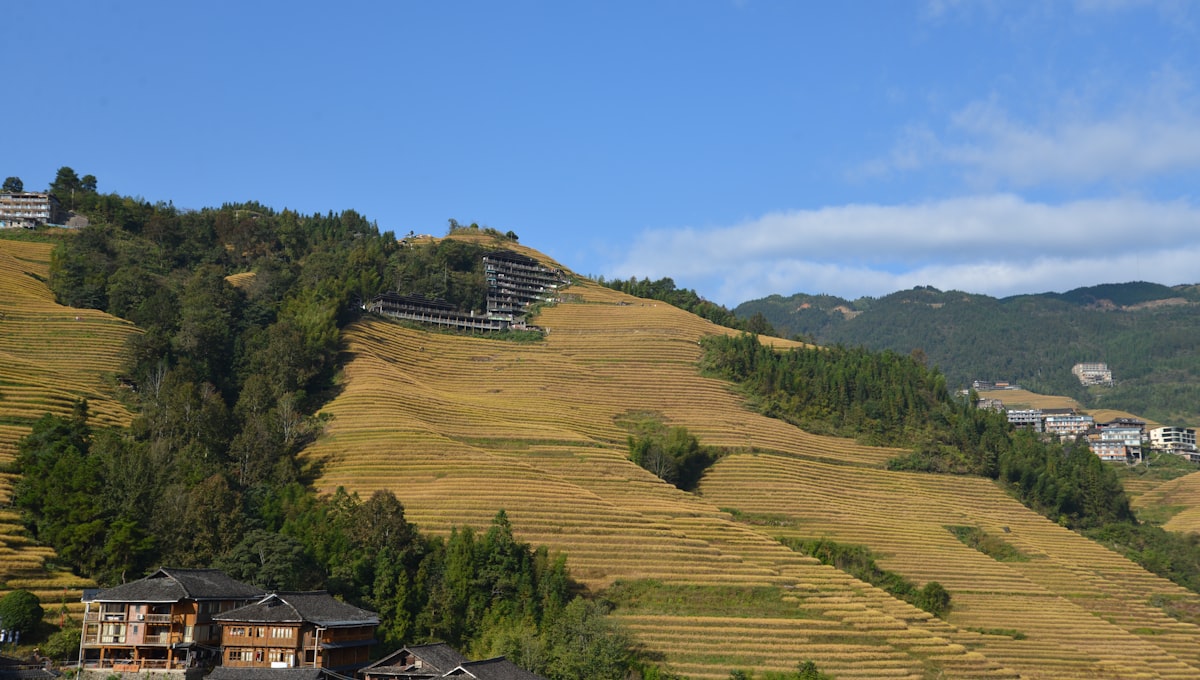
Boseong, in South Jeolla Province, produces roughly 40% of South Korea's green tea. The hillside tea plantations are genuinely beautiful — rows of closely clipped camellia sinensis bushes contour the hillsides in a geometry that feels both agricultural and architectural. The best views are from the ridge path above the Daehan Dawon plantation, which dates to 1939 and remains the largest in the country.
Visit in May for the spring harvest, when the tea leaves are picked by hand and the plantation is at its most active. November turns the surrounding forest and hillside paths gold and red. The plantation itself has a tea house and tasting room; a set of four regional teas costs about 7,000 KRW ($5.30).
Getting to Boseong by public transit requires bus connections from Suncheon or Gwangju. With a car or a hired car from Suncheon, it's about 45 minutes.
Flying to South Korea from Europe and the US
Getting to South Korea from North America or Europe almost always means flying into Incheon International Airport (ICN), consistently rated one of the world's best airports. From the US West Coast, Korean Air (KE) and Asiana Airlines (OZ) operate direct services from Los Angeles (LAX) and San Francisco (SFO) to ICN in about 11–12 hours. From the East Coast, routing is typically through ICN's direct connections from New York (JFK) or via Tokyo Haneda or Narita.
From Europe, the most competitive routes are via Korean Air through Amsterdam (AMS), Paris (CDG), or Frankfurt (FRA), or via Asiana through similar hubs. Emirates and Qatar routes via their Gulf hubs are often competitive on price. Flying time from London is about 11–12 hours direct.
Regional pricing on South Korea flights can be significant. The same Seoul-bound itinerary can show materially different prices depending on which market version of a booking site you search from. Asian markets — particularly Japan, Hong Kong, and Singapore — frequently show lower fares than European or North American ones on Korea-bound flights. RegionFare's cross-market comparison covers all 97 regional versions simultaneously, which is worth checking before booking any long-haul fare to ICN.