
A Weekend in Amsterdam: Canals, Culture, and Where to Save
April 30, 2026
Amsterdam runs on a dual economy. The tourist circuit — the Heineken Experience, the Anne Frank House queue at 11am, the pancake restaurants on the main canals — operates at a significant price premium over the Amsterdam that locals actually use. The good news is that the two versions of the city occupy the same geography, and the gap between them is often just a single street or a 15-minute tram ride. A well-planned weekend can get you the real city at close to local prices.
Getting There and Getting Around
Amsterdam Schiphol (AMS) is one of Europe's best-connected airports. From the UK, KLM, easyJet, and British Airways all compete on the route; Transavia and Ryanair add further competition from secondary UK airports. The fare floor for London–Amsterdam is low enough that booking 3–6 weeks out usually produces fares in the £50–90 return range outside of peak summer and Dutch public holidays.
From Schiphol, the Intercity Direct train runs to Amsterdam Centraal in 17 minutes for €6.20 (or €18.50 with the Sprinter supplement if you take the slower route without booking the supplement). Skip the taxi. The airport taxi queue is expensive and the train puts you at the heart of the city with better luggage storage options.
The GVB tram and metro system is what you'll use within the city. A 24-hour OV-chipkaart costs €9, a 48-hour pass €15, a 72-hour pass €21. The passes include trams, buses, metro, and the GVB ferries across the IJ from Centraal. If you're staying near Centraal and walking most of the time, you may not need a pass at all — Amsterdam's center is compact enough that most key sites are within 25 minutes on foot.
Day 1: The Museum Quarter and Vondelpark
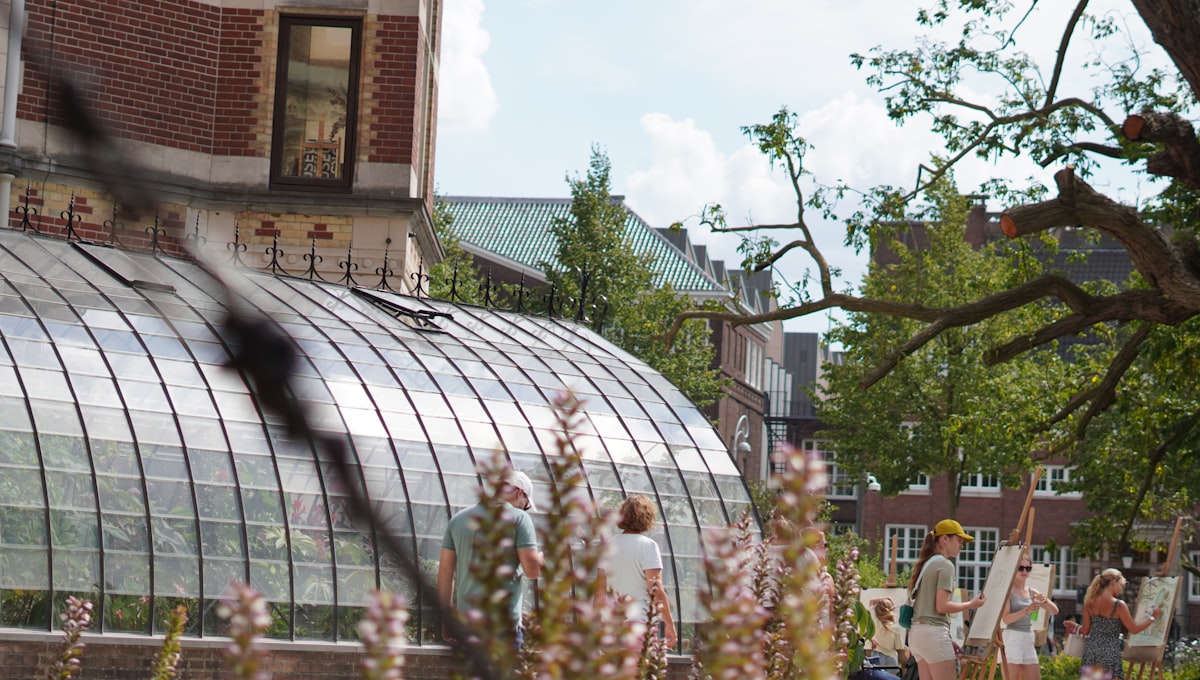
The Rijksmuseum is non-negotiable. It's one of the finest collections in the world — Rembrandt's Night Watch, Vermeer's Milkmaid, and 8,000 other objects spread across a building that Cuypers designed in 1885 and that underwent a decade-long renovation ending in 2013. Entry is €22.50. Buy tickets online before arriving; the walk-up queue at peak times runs 45 minutes, and the online booking is immediate. Allow three hours minimum.
The Van Gogh Museum next door is excellent but the queues are worse and the experience depends heavily on whether you enjoy the crowd management style (timed entry, one-directional flow). It's worth it for the concentration of Van Gogh's work; expect to pay €22 and spend 90 minutes.
Lunch: skip the museum cafes and walk five minutes to the Foodhallen in De Hallen (a converted tram depot in Oud-West). It's a food hall with 18 stalls ranging from Vietnamese banh mi to Portuguese custard tarts. Budget €12–15 per person. A single-item at any stall is €5–8, and the quality is considerably above what tourist-quarter restaurants at double the price deliver.
Vondelpark in the afternoon if the weather permits. It's a public park the size of Central Park's southern portion, and on a weekend afternoon in spring or early autumn, it operates as an extension of Amsterdam's social life: street musicians, cyclists, picnics, dogs. Free. A ten-minute walk from the museum quarter.
Day 1 Evening: Jordaan
Jordaan is the neighborhood you're looking for dinner. The area west of the Prinsengracht canal, between Brouwersgracht and Leidsegracht, has the highest density of genuinely good neighborhood restaurants in the city. Brouwerij 't IJ, the organic brewery in a windmill on Funenkade, produces some of the city's best craft beer (€3.50–4.50 per 0.3L glass) and is worth a pre-dinner detour. De Bloemendaal op den Hoek (Egelantiersgracht 12) serves Dutch-Indonesian rijsttafel for €28 per person — this is the colonial culinary inheritance that Amsterdam does particularly well, and a proper rijsttafel is more interesting than anything on the tourist-menu circuit.
Day 2: The Canal Ring, the Jewish Quarter, and the IJ
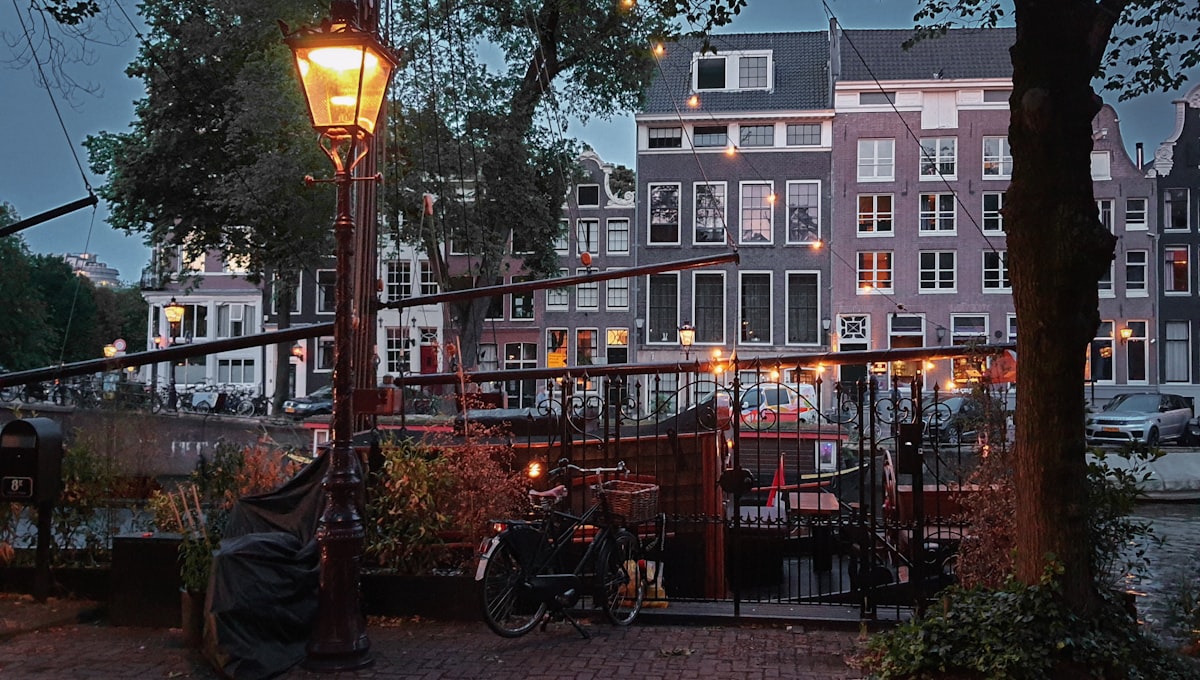
Morning: walk the canal ring systematically. The Herengracht, Keizersgracht, and Prinsengracht form concentric arcs and are UNESCO World Heritage sites. The 17th-century canal houses — narrow, tall, with ornate gables and the characteristic forward-lean (built to allow furniture to be hoisted through upper-floor windows) — are best seen in morning light before the tourist boats start running at scale. The Westerkerk (free entry, €9 for the tower) marks the center of the Jordaan.
The Anne Frank House (Prinsengracht 263) requires booking online weeks in advance for a time slot — it is consistently one of Europe's most oversubscribed museum experiences. Entry is €16. The experience is affecting and serious, and the original building has been well preserved. If you haven't booked, it's not walkable.
Afternoon: cross the IJ on the free GVB ferry from behind Centraal station to Amsterdam-Noord. The ferry takes four minutes and runs 24/7 at no charge. Noord has undergone significant transformation in the past decade and now hosts the EYE Film Museum (€12, architecturally interesting even from outside), the NDSM Wharf (a former shipyard turned cultural venue, free to walk), and the better street food market scene in the city. The Sunday market at NDSM, Ijhallen, is one of Europe's largest flea markets when it runs (first and second Sunday of the month, €5 entry).
What Things Actually Cost
For a weekend (two nights): a reasonable mid-range hotel in the Jordaan or De Pijp runs €150–200/night for a double. Budget options in Noord or east Amsterdam start at €90/night. Food: eating properly at neighborhood restaurants rather than tourist-circuit spots runs €45–65 per person per day including coffee. Transport: €15–20 for the weekend. Museums: €44–50 for Rijksmuseum plus one other.
The biggest single saving available in Amsterdam is on the accommodation. The difference between a hotel on Damrak (tourist strip pricing) and an identical-quality hotel in De Pijp or Oud-West is €40–70 per night for the same standard of room.

Flights: The Regional Pricing Angle
KLM prices its Amsterdam routes differently across European markets. The fare from London City (LCY) to Amsterdam (AMS) via KLM Cityhopper can vary by £25–40 depending on whether you're booking through the Dutch, Belgian, or UK version of the site. RegionFare surfaces all these variations simultaneously — for a two-person trip, the difference across markets is often enough to cover a museum and dinner.