
Cheapest Months to Fly to Tokyo: A Data-Driven Guide
April 30, 2026
Tokyo is one of the world's great travel destinations — a city that somehow manages to be ancient and futuristic at the same time. It's also a long-haul flight from most of the world, which means the price of your plane ticket can easily become the largest single cost of your trip. USA to Tokyo routes, round-trip fares to Tokyo (Narita or Haneda) range from around $700 in the quiet season to well over $1,400 during peak travel periods. That's a gap worth paying attention to.
This guide breaks down when fares to Tokyo are cheapest, when they spike, and — crucially — how to shave even more off the price once you've picked your travel window. The short version: fly in January, February, or September, avoid late March through April, and use a cross-market comparison tool to find the cheapest regional fare for your dates.
January-February: The Cheapest Window of the Year
The weeks between New Year's and early March are consistently the most affordable time to fly to Tokyo. Japan's winter is mild compared to many Western countries — temperatures in Tokyo hover between 5-10C (40-50F) — and international tourist numbers drop sharply after the holiday rush ends. Airlines respond by trimming fares to fill seats.
From major US gateways like New York (JFK), Los Angeles (LAX), and San Francisco (SFO), round-trip fares to Tokyo in January and February regularly fall into the $700-$950 range when booked three to six weeks in advance. Travelers from Europe can find fares in the £450-£650 / €500-€700 range during the same window. These are among the best prices you'll see all year on this route.
What you give up: some popular festivals and events overlap with spring. But Tokyo in winter has its own appeal — fewer crowds, crisp air, and the chance to see the city without fighting through tourist season. Winter illumination displays at Roppongi Hills and Shinjuku are genuinely beautiful, and the city's indoor food and culture scene is unaffected by weather.
One caveat: the week of late December through early January (Japan's New Year holiday, or shogatsu) is a domestic travel peak in Japan. International flights during this window can be more expensive than the rest of winter. If you're targeting cheap fares, aim for January 10 onwards to avoid the holiday premium.
September-October: The Underrated Sweet Spot
If you can't travel in winter, September and October are your next best option. The summer peak winds down in late August, Japan's rainy season (tsuyu) has ended, and the crushing heat and humidity of July and August give way to genuinely pleasant autumn weather — clear skies, temperatures in the low-to-mid 20s Celsius (low 70s Fahrenheit), and the beginning of autumn foliage in October.
Fares from the US to Tokyo in September and October typically land in the $800-$1,100 range, noticeably lower than the summer peak but higher than January-February. The tradeoff is better weather and more things to do outdoors. Many travelers consider this the best all-around month to visit Japan — cheap enough to be a good deal, comfortable enough to enjoy the experience.
October does carry a slight premium over September as word has spread about autumn in Japan. If budget is your primary concern, early-to-mid September will generally offer the lowest fares of this autumn window.
Late March-April: Cherry Blossom Premium
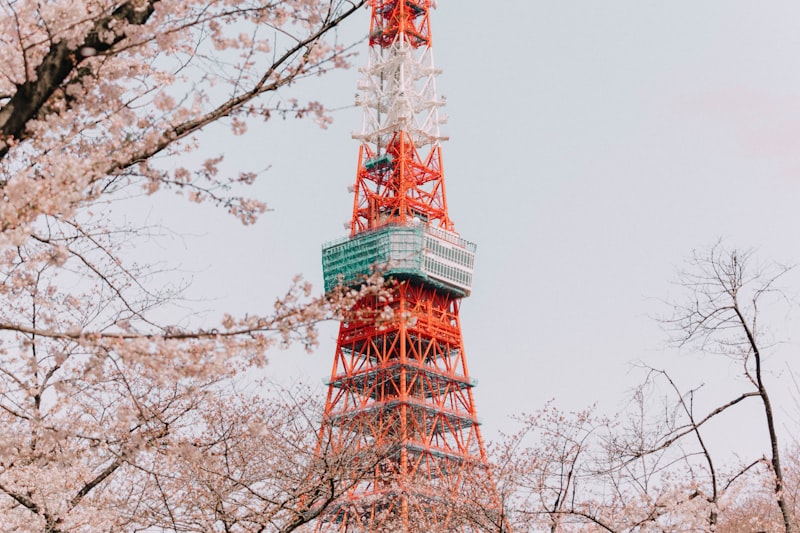
Cherry blossom season (sakura) runs roughly from late March through mid-April, and it is unambiguously the most popular time to visit Tokyo. The blossoms are genuinely spectacular, the city puts on its best face, and demand from international tourists reaches its yearly peak. Airlines and booking sites know this — and price accordingly.
During cherry blossom season, round-trip fares from the US to Tokyo regularly climb to $1,200-$1,500 or more. Business class upgrades become scarce, hotels fill up months in advance, and any flexibility on dates disappears quickly. If you're set on cherry blossoms, book early — ideally five to six months out — to lock in something reasonable before prices spike further.
July-August: Summer Peak Pricing
Tokyo in summer is hot, humid, and expensive. July and August are peak domestic travel months in Japan (Obon in mid-August sends millions of Japanese travelers home to their hometowns), and international tourist volume is high. Airlines price summer fares accordingly.
Expect to pay $1,100-$1,400 round-trip from major US cities in July and August. Beyond the cost, summer in Tokyo involves heat indices that can make sightseeing genuinely unpleasant in the middle of the day — many long-term expats and frequent visitors actively avoid visiting in July and August.
Best Days of the Week to Fly
Beyond choosing the right month, the day of the week you depart makes a meaningful difference on long-haul routes. Tuesday and Wednesday departures tend to be the cheapest, often 5-10% below the weekly average. Friday and Sunday are typically the most expensive.
A Tuesday or Wednesday departure in January or February compounds nicely: you're already in the cheapest month, and you're flying on a cheaper day of the week. This combination consistently produces the lowest fares of the year on the US-Tokyo route.
How to Save Even More with Cross-Market Booking

Here's something most travelers don't know: the same Tokyo flight, on the same airline, same date, same seat — can cost meaningfully different amounts depending on which country's version of a booking site you use.
Booking sites like Skyscanner operate separate regional versions for different markets: Skyscanner.de serves Germany, Skyscanner.pl serves Poland, Skyscanner.co.jp serves Japan itself. Airlines and OTAs set different base fares for different markets based on local purchasing power, competition, and demand. The result is that the cheapest fare for your specific flight might be found through Israel's Skyscanner, or Poland's, or Japan's — not through your home country's site.
Across flights to Tokyo that we've tracked at RegionFare, the price difference between the most expensive and cheapest regional market for the same flight typically ranges from 10% to 25%. On a $900 round-trip fare, that's $90 to $225 sitting on the table.
This effect applies regardless of which month you fly. Even within the cheapest window (January-February), there's a spread across the 97 markets that booking sites operate in. The cheapest month gets you into the right price band; cross-market comparison finds the best deal within that band.
Quick Reference: Tokyo Flight Prices by Month
January (mid-month onward): $700-$950 — cheapest of the year. February: $700-$950 — equally cheap, slightly warmer. March (early): $800-$1,100 — starts rising as spring approaches. Late March-April: $1,200-$1,500+ — cherry blossom peak, book early. May-June: $900-$1,200 — shoulder season, decent value. July-August: $1,100-$1,400 — summer peak, hot and humid. September: $800-$1,050 — second-best window of the year. October: $900-$1,100 — beautiful autumn, slightly pricier than September. November: $850-$1,050 — autumn foliage peak, good value. December (early-mid): $900-$1,100 — comfortable, pre-holiday pricing. Late December: $1,100-$1,400 — holiday premium kicks in.
The Bottom Line
If price is your primary concern, January and February are the months to target for Tokyo flights. Fares are consistently the lowest of the year, crowds are thinner, and the city is fully open for business. September and October are a close second — better weather, slightly higher fares, still far cheaper than cherry blossom or summer peak.
Whatever month you choose, don't assume the price on your usual booking site is the best available. Airlines use regional pricing, and the spread across 97 markets can be substantial — sometimes more than the difference between flying in the cheap season versus the shoulder season.
RegionFare checks prices across all 97 regional markets simultaneously and shows you which country's site has the cheapest fare for your specific flight. It takes seconds and works for Tokyo routes from any origin. It's the simplest way to stack the month-based savings on top of market-based savings and get as close as possible to the true lowest price.
Airline Comparison: ANA vs JAL vs Budget Carriers
The airline you choose for Tokyo matters as much as the month you fly. The realistic options from Western markets are Japan Airlines (JL), All Nippon Airways (NH/ANA), budget long-haul carriers, and Gulf or Asian network carriers connecting through their hubs.
Japan Airlines and ANA are both excellent and broadly comparable in economy class. JAL tends to earn slightly higher customer satisfaction scores for its meal service on long-haul routes; ANA is often marginally cheaper in off-peak months and has a better seat in economy on its 787 Dreamliner fleet. Both carriers fly non-stop from London Heathrow to Tokyo Haneda (HND) — ANA on the 787, JAL on the 777-300ER. Non-stop from London takes approximately 12 hours westbound, 14 hours eastbound.
For price-conscious travellers, JAL (Oneworld) often shows lower fares through partner booking tools, while ANA (Star Alliance) sometimes has better inventory through United or Lufthansa booking channels. Run the comparison across both when searching — the gap can be £50–80 per ticket for equivalent cabin and routing.
Budget long-haul is the newer option. Scoot (TR) and Norse Atlantic offer significantly lower base fares — sometimes £350–500 return in off-peak months — but with strictly unbundled pricing. Checked baggage, seat selection, and meals are all paid additions. On a 13-hour flight, the all-in price including one checked bag and seat selection often lands within £80–100 of the full-service legacy carrier.
Connecting Hub Options
Non-stop from London costs £50–150 more than connecting routes but saves 4–6 hours of total travel time. If you're flexible on routing, these connecting hubs consistently offer competitive fares:
Via Dubai (Emirates): well-timed connections, comfortable A380 transit at DXB. Economy fares from London via Dubai run £500–680 return in off-peak months.
Via Doha (Qatar Airways): similar product and timing. Off-peak economy from London runs £480–660.
Via Seoul (Korean Air): less commonly considered by European travellers but consistently competitive. Korean Air's Incheon hub (ICN) offers a 2.5-hour connection to Tokyo, and fares occasionally undercut Gulf carrier pricing by £40–80.
Via Hong Kong (Cathay Pacific): Hong Kong–Tokyo is a 4-hour hop, and Cathay's product is strong. Worth checking when Cathay has a sale or if your itinerary includes a Hong Kong stopover.

Tokyo Airport Tips: Narita (NRT) vs Haneda (HND)
Narita International (NRT) is 60–80 km east of central Tokyo. The Narita Express (N'EX) reaches Shinjuku in 90 minutes and costs ¥3,070 (around £15). The Keisei Skyliner reaches Ueno in 41 minutes for ¥2,570. Narita handles the majority of low-cost international traffic. Taxis to central Tokyo cost ¥20,000–30,000 — avoid unless splitting the fare between passengers.
Haneda (HND) is much closer — 20 km from central Tokyo. The Tokyo Monorail reaches Hamamatsucho in 18 minutes for ¥500; the Keikyu Line reaches Shinagawa in 11 minutes for ¥310. Both connect directly to the JR and subway networks. Haneda flights typically cost £30–60 more than Narita equivalents, but the saved ground time and lower transport cost often makes Haneda the better overall value for travellers staying in central Tokyo. ANA, JAL, and several European carriers have been shifting more long-haul services to Haneda since its international terminal expanded in 2020.
Accommodation Booking Windows by Season
Cherry blossom (late March–early April): Book 5–6 months in advance. Popular hotels in Kyoto's Higashiyama district sell out by December for March travel. Business hotels in slightly less central locations often hold availability at reasonable rates when tourist-facing properties are gone.
Golden Week (late April–early May): One of the busiest domestic travel periods in Japan. Best avoided unless accommodation is secured months ahead.
Autumn foliage in Kyoto (mid-November): Book 3–4 months out minimum.
Off-peak (January–February, early June): Availability is plentiful and prices are 30–50% below peak. Last-minute booking in January for the same week often works.
Budget by Season: What Tokyo Actually Costs
January–February (cheapest): Flights from London £450–600. Mid-range hotel in Shinjuku or Asakusa ¥12,000–16,000 per night (roughly £60–80). A 10-day trip including flights, accommodation, and daily expenses: £1,400–1,900 per person.
Cherry blossom peak: The same accommodation runs ¥25,000–40,000. Flights £800–1,100. A 10-day trip: £2,200–3,200 per person. Tokyo's restaurants and transport don't have seasonal pricing — the cost difference is almost entirely in flights and accommodation.
Autumn (October–November): Mid-range hotels ¥18,000–25,000. Flights £550–750. A 10-day trip: £1,700–2,400 per person — a meaningful middle ground between off-peak and peak spring pricing.
 Cheapest Flights to Bangkok: A Season-by-Season Breakdown